

 English
 Español
 русский

100 μm FEP Film: Light Transmittance Impacts SLA/DLP 3D Printing Accuracy and Speed
Every SLA and DLP resin printer relies on a thin, transparent film at the bottom of the resin vat. This film, usually made of FEP, determines how UV light reaches the resin and how cleanly each cured layer separates from the vat. Among the available specifications, 100 μm light transmittance FEP film has become a widely adopted standard in resin 3D printing. This guide explains what this film is, how light transmittance affects printing accuracy and print speed, and how to choose the right film for your workflow.
Content
- 1 What Is 100 μm Light Transmittance FEP Film?
- 2 How Light Transmittance Affects SLA/DLP Printing Accuracy
- 3 How FEP Film Affects SLA/DLP Print Speed
- 4 100 μm FEP Film vs. Thinner and Thicker Alternatives
- 5 How to Choose 100 μm FEP Film for Your Resin Printer
- 6 FEP Film Maintenance, Cleaning, and Replacement
- 7 Frequently Asked Questions
What Is 100 μm Light Transmittance FEP Film?
FEP, or fluorinated ethylene propylene, is a fluoropolymer known for excellent transparency, UV stability, chemical resistance, and a naturally low surface energy. In an SLA or DLP printer, a sheet of FEP film is mounted at the bottom of the resin tank. The build plate lowers close to the film, the light engine cures a thin layer of resin between the plate and the film, and then the film releases from the cured layer so the next layer can form.
The value "100 μm" refers to the film thickness: 100 micrometers, or 0.1 mm. This is a practical middle ground — stiff enough to hold a flat, uniform surface, yet flexible enough to deform slightly during separation and promote a clean release. Light transmittance describes the percentage of UV light that passes through the film instead of being absorbed or reflected. A well-manufactured 100 μm FEP film typically transmits more than 93 percent of UV light in the 365 to 405 nm wavelength range used by most SLA and DLP printers.
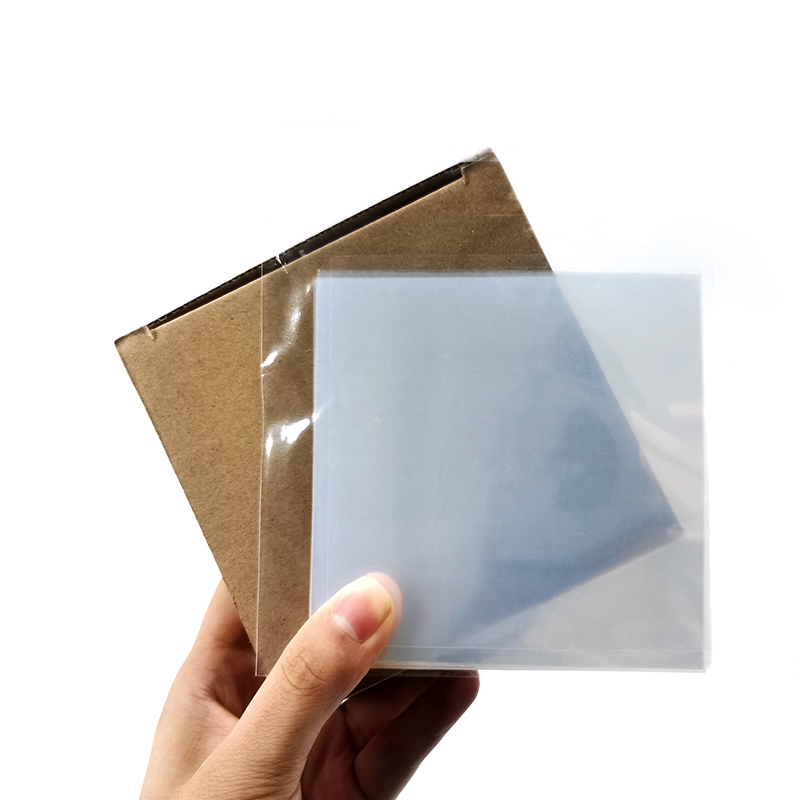
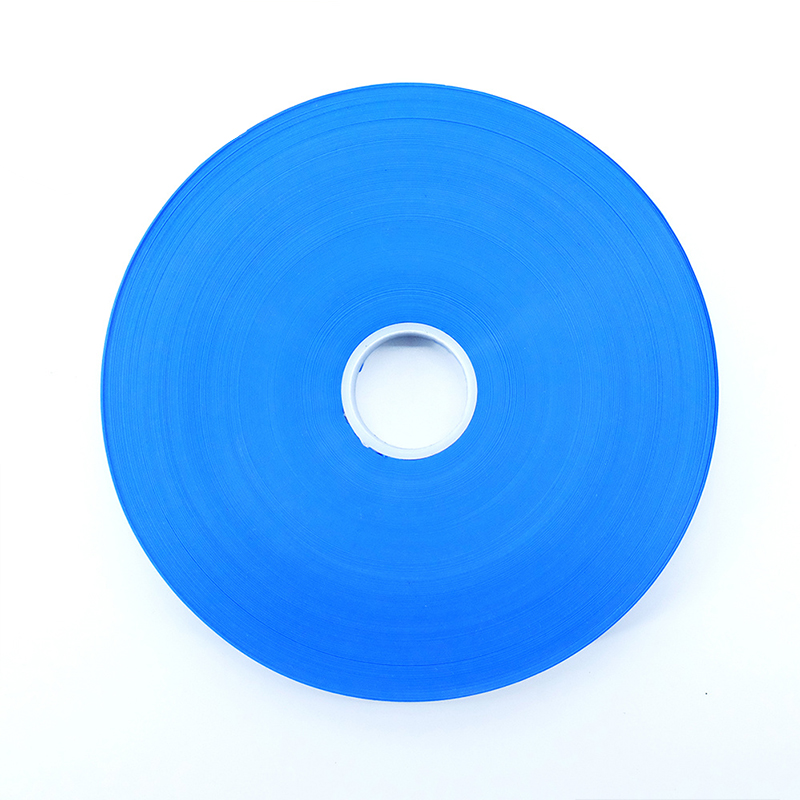 100μm High-Transmittance FEP Film for LCD/DLP 3D PrintersThis 0.1mm FEP film transmits 96% of UV light, ensuring accurate resin curing. Its non-stick surface and chemical resistance make it a reliable choice for consistent print quality and easy release.View Product →
How Light Transmittance Affects SLA/DLP Printing Accuracy
Printing accuracy is not determined by the XY resolution of the light engine alone. The optical path from the light source to the resin must be as distortion-free as possible, and the FEP film is part of that path. If the film absorbs or scatters UV light, the resin receives less curing energy, and the cured geometry can deviate from the intended shape.
High light transmittance preserves the intensity of the UV beam, allowing the resin to cure to the expected depth and width in each layer. Uneven transmittance is a more subtle problem: local variations in the film create inconsistent curing across the build area, sometimes appearing as banding, rough surfaces, or rounded edges on fine features. This is why you should look for a film that offers both high average transmittance and good optical uniformity. A practical starting point is improving the printing accuracy of complex structures through 100 μm FEP film, because the optical consistency directly reduces trial and error in detailed parts.
How FEP Film Affects SLA/DLP Print Speed
Print speed depends on two main factors: the exposure time needed for each layer and the time required for the cured layer to separate from the bottom of the vat. FEP film influences both of them.
Lower light transmittance means a smaller UV dose reaches the resin. To achieve the same degree of curing, the printer must increase exposure time, which slows the whole print. A high-transmittance 100 μm film allows the printer to keep exposure settings shorter without sacrificing layer quality.
Separation speed is a mechanical effect. After a layer is cured, the build plate lifts, and the cured resin must peel away from the film. FEP has very low surface energy, so resin does not bond strongly to it — this is exactly why FEP is used for release films. Film thickness then controls the peel behavior. A more rigid film resists deformation and creates a larger peel force, while a more flexible film bends slightly and lets the peel front move faster. The 100 μm thickness balances these factors: separation is fast enough for productive printing, and the film remains stable enough to keep the vat surface flat.
Lower separation force also reduces stress on freshly cured layers, helping preserve delicate overhangs and fine details even when print speed is increased.
100 μm FEP Film vs. Thinner and Thicker Alternatives
Resin printer users typically choose among three thickness levels. The table below summarizes how each behaves in common SLA and DLP printing conditions.
| Film Thickness | UV Transmittance | Flexibility | Release Behavior | Durability | Typical Use |
|---|---|---|---|---|---|
| 50 μm | High | Very flexible | Fast peel, easy dimpling | Lower | Small, detail-focused models |
| 100 μm | High (>93%) | Balanced | Clean release with stable shape | Balanced | Standard SLA and DLP printing |
| 150 μm | Moderate | More rigid | Larger peel force | Higher | Large parts and heavy-duty resin use |
Transmittance depends on more than thickness; surface finish and material purity matter just as much. A high-quality 100 μm film can outperform a thinner film with poor optical consistency.
How to Choose 100 μm FEP Film for Your Resin Printer
Start with the practical fit. Measure the resin vat frame before cutting the film, and confirm that the replacement sheet is designed for the build area of your printer.
Then consider the resins you plan to use. Standard and low-viscosity resins work well with a 100 μm film, which balances detail reproduction and release speed. If you print large, heavy models that stay in the vat for long periods, a thicker film may last longer, but it will require more separation force and slightly longer release cycles. That is why many users return to 100 μm film when they are focused on unlocking precision and quality in daily 3D printing workflows.
Finally, check the supplier's stated transmittance, thickness tolerance, and film consistency. A reliable specification sheet is the first sign of a dependable release film.
FEP Film Maintenance, Cleaning, and Replacement
- Clean the film gently with isopropyl alcohol and a soft lint-free cloth; avoid sharp tools and abrasive pads.
- Remove cured resin debris promptly, as hard flakes can scratch the film surface during printing or cleaning.
- Replace the film when you notice dents, hazing, reduced first-layer adhesion, or an increasing number of failed prints.
- Install the new film with even tension. Over-tightening can stretch the film and change its optical and release properties.
Frequently Asked Questions
Q1: Can 100 μm FEP film be used on both SLA and DLP printers?
Yes. The film works in any resin vat design where UV light passes through the bottom film. Confirm the vat dimensions and frame style before cutting or installing the sheet.
Q2: How long does a 100 μm FEP film last?
With regular maintenance, it can last weeks or even months depending on print volume, resin chemistry, and exposure settings. Replace the film when the surface becomes hazy or shows visible dents.
Q3: Does higher light transmittance always produce better prints?
High transmittance is important, but consistency and thickness uniformity are just as critical. A film with high but uneven transmittance can cause localized curing differences across the build area.
Q4: What is the difference between FEP and PTFE film for 3D printing?
Both are fluoropolymers with low surface energy and good chemical resistance. FEP offers better optical clarity for UV curing, which makes it the standard choice for resin vat release film. PTFE film is generally more opaque and is more often used in industrial release and separating applications.
The 100 μm light transmittance FEP film sits at the intersection of optical clarity, mechanical release, and durability. It does not change the native resolution of a printer, but it preserves the UV energy needed for consistent curing and reduces the forces that slow down layer separation. This combination is why it can measurably improve both printing accuracy and print speed in SLA and DLP resin printers. When purchasing FEP film, look for verified transmittance, uniform thickness, and clean manufacturing — the same qualities that define a dependable print run.
Message Us Right Now!

- Phone: +86-18651171105
- Fax: +86-18651171105
- Email: yaxing@yaxing.com
- Address: No. 18, Yongxin East Road, Gaogang District, Taizhou City, Jiangsu Province, China.
Copyright © Yaxing Plastic Industry Co., Ltd. All Rights Reserved. Custom High-End Precision PTFE Series Products Manufacturers 