

 English
 Español
 русский

PTFE Coated Aramid Fabric vs. PTFE Glass Fabric: Tear & Flex-Fatigue Life
When an application demands PTFE Coated Aramid Fabric vs. PTFE Glass Fabric, the decision is rarely about PTFE itself. Both fabrics use a PTFE layer to deliver nonstick behavior, low friction, weather resistance, and chemical protection. The deciding factors lie in the base reinforcement: aramid fiber or glass fiber. This article compares their tear resistance, flexibility, and flex-fatigue life so you can choose the right high-temperature coated fabric with confidence.
Taizhou Yaxing Plastic Industry Co., Ltd. has coated both aramid and glass fabrics for more than 20 years, so the comparison below reflects both material science and production experience.
Content
- 1 Material Construction: Aramid Fiber vs. Glass Fiber
- 2 Tear Resistance: Why Coated Aramid Wins Under Stress
- 3 Flexibility: Conformability Without Damage
- 4 Flex-Fatigue Life: Surviving Millions of Bends
- 5 PTFE Coated Aramid vs. PTFE Glass: Side-by-Side Comparison
- 6 Application Guidance: How to Choose
- 7 Frequently Asked Questions
- 8 Choosing a Reliable PTFE Fabric Partner
Material Construction: Aramid Fiber vs. Glass Fiber
PTFE coating makes the surface behave the same way, but the base fabric defines the mechanical behavior. Aramid is an organic polymer fiber with long-chain molecules; it bends and absorbs energy. Glass fiber is inorganic, strong in tension but brittle under local stress.
PTFE Coated Aramid Fabric
Aramid yarns are woven into a fabric and then saturated with PTFE resin. The result is a textile that keeps its shape even after repeated bending. It is often used where a tear or puncturing force could destroy a more brittle material. Our production range includes PTFE-coated aramid fabric in different weights and constructions.
 PTFE-Coated Aramid Fabric for High-Heat Protective ApplicationsThis fabric combines aramid's cut, tear, and abrasion resistance with PTFE's non-stick and thermal properties. It suits demanding roles like welding blankets and heat shields, where flexibility and durability under repeated stress are essential.View Product →
PTFE Glass Fabric
Fiberglass yarns are woven and coated with PTFE in the same way. The glass base gives very high dimensional stability, high heat resistance, and low elongation. However, glass fibers are less forgiving when creased or twisted. PTFE glass fabric is a proven choice for static hot surfaces and many continuous-process applications.
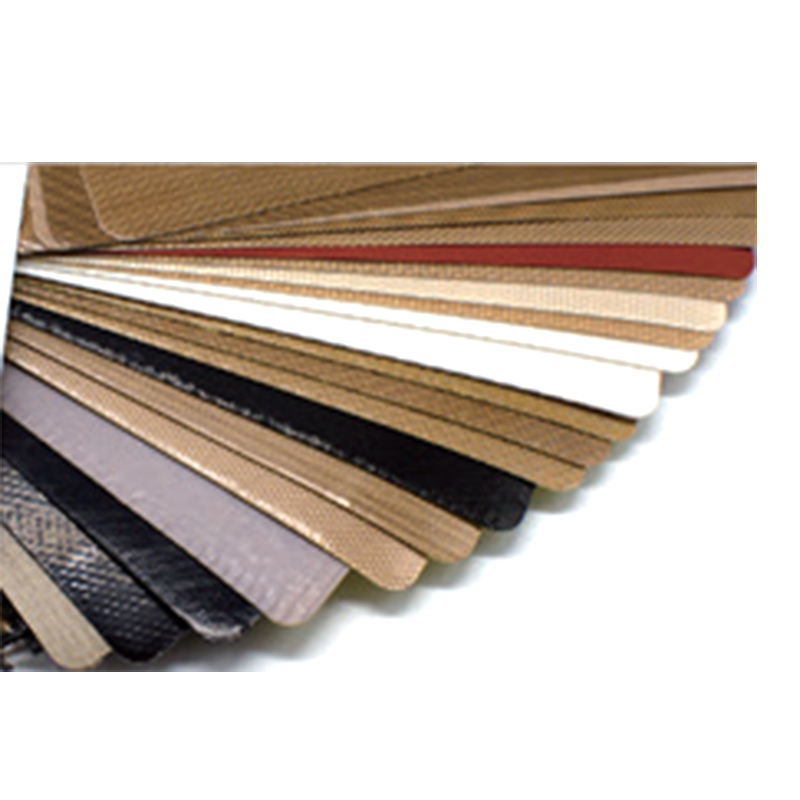 Single-Side PTFE-Coated Fiberglass Fabric for Static SurfacesWith PTFE on one side and fiberglass exposed on the other, this material offers dimensional stability and heat resistance. It is a reliable option for continuous-process applications that require a robust, low-elongation substrate.View Product →
Tear Resistance: Why Coated Aramid Wins Under Stress
Tear resistance is the ability to resist a tear from spreading after the material has been cut or punctured. Aramid fibers have high tenacity and break gradually under overload. When aramid is woven and coated with PTFE, the coating holds the yarns together and prevents small cuts from traveling across the fabric.
Glass fabric, by comparison, has high initial strength but the fibers are brittle. A sharp impact can crack individual glass filaments. Once a tear begins, the load concentration at the tear tip can exceed the remaining fiber strength and propagate rapidly.
For edge loads, snagging, and repeated handling, PTFE-coated aramid fabric offers significantly better tear resistance than PTFE glass fabric.
Flexibility: Conformability Without Damage
Flexibility determines how easily fabric can wrap around rollers, corners, and curved surfaces. Aramid-based fabric has a textile-like drape. It can be folded, sewn, or shaped without losing its load-bearing ability. This is why PTFE-coated aramid fabric appears in flexible joints, welding screens, and protective covers.
PTFE glass fabric is stiffer. It can be made flexible by choosing a lighter weave, but on heavy-duty cloths, folding creates permanent creases where glass fibers crack. The cracked fibers become weak points that reduce the service life of the fabric.
Flex-Fatigue Life: Surviving Millions of Bends
Flex-fatigue life is the number of bending cycles a material can survive before failure. In applications like conveyor belting, expansion joints, gaskets, and door seals, the fabric is flexed constantly. Aramid fibers, because they are polymer chains, absorb mechanical energy and return to shape. They can withstand millions of flex cycles when designed correctly.
Glass fibers do not have the same ability. Over time, cyclic bending causes surface micro-cracks in the glass filaments. The micro-cracks grow, fibers break, and the PTFE coating loses structural support. Therefore, PTFE-coated aramid is the better choice for high-frequency flexing.
PTFE Coated Aramid vs. PTFE Glass: Side-by-Side Comparison
| Property | PTFE Coated Aramid Fabric | PTFE Glass Fabric |
|---|---|---|
| Base Fiber | Aramid yarn | Continuous fiberglass yarn |
| Tear Resistance | Excellent; resists tear propagation | Good initially; brittle after creasing |
| Flexibility | Outstanding; textile-like | Moderate; stiff and crease-prone |
| Flex-Fatigue Life | Very high under cyclic bending | Limited under repeated flexing |
| Continuous Heat | Good for most industrial high-temp uses | Higher heat ceiling |
| PTFE Surface | Nonstick, low friction, chemical resistant | Nonstick, low friction, chemical resistant |
| Best For | Dynamic, high-load applications | Static, high-temperature applications |
These comparisons are general. Actual values depend on weave style, yarn denier, coating weight, and finishing process. Always test the fabric in your real environment.
Application Guidance: How to Choose
Use PTFE-coated aramid fabric when:
- Tear or puncture risk is high.
- The fabric wraps around edges, rollers, or irregular shapes.
- Repetitive flexing is part of the duty cycle.
- Weight saving is important compared with heavier glass constructions.
Use PTFE glass fabric when:
- Continuous high temperature is the main requirement.
- Dimensional stability and low elongation are critical.
- The application is static or has only gentle bending.
- Cost efficiency matters more than mechanical toughness.
In many industrial plants, both materials are used in different parts of the same system. A conveyor line might use PTFE glass for a drying section and PTFE-coated aramid for a folding section with high load.
Frequently Asked Questions
Q1: Is PTFE coated aramid fabric more tear-resistant than PTFE glass fabric?
Yes. Aramid fibers are tougher and less brittle than glass fibers, so PTFE-coated aramid fabric resists tear propagation better in demanding mechanical conditions.
Q2: Does PTFE glass fabric have better heat resistance?
In general, glass fabric offers a higher continuous temperature ceiling than aramid fabric. However, aramid fabric can still handle most industrial high-temperature applications when flex life is the bigger concern.
Q3: Can PTFE glass fabric be used in flexible conveyor belts?
Yes, PTFE glass fabric is a standard material for many conveyor belts. For paths with tight rollers or extremely high flex counts, PTFE-coated aramid fabric provides longer flex-fatigue life.
Q4: How do I select the right fabric weight and coating?
Contact a PTFE-coated fabric manufacturer with your application details. Temperature, mechanical load, flex cycles, and chemical exposure determine the best base fabric, weave, and PTFE formulation.
Choosing a Reliable PTFE Fabric Partner
The choice between PTFE-coated aramid and PTFE glass fabric is not one of better versus worse; it is about matching mechanical properties to the application. Aramid brings tear resistance, flexibility, and flex-fatigue life. Glass brings heat resistance and dimensional stability.
Taizhou Yaxing Plastic Industry Co., Ltd. has been manufacturing PTFE-coated fabrics in Taizhou, China, since 1995. With in-house coating, slitting, and quality control, we support engineers who need consistent materials for demanding processes. For a closer look at the high-strength option, read our technical overview of PTFE-coated aramid fabric.
Message Us Right Now!

- Phone: +86-18651171105
- Fax: +86-18651171105
- Email: yaxing@yaxing.com
- Address: No. 18, Yongxin East Road, Gaogang District, Taizhou City, Jiangsu Province, China.
Copyright © Yaxing Plastic Industry Co., Ltd. All Rights Reserved. Custom High-End Precision PTFE Series Products Manufacturers 