

 English
 Español
 русский
Engineering Excellence: The Comprehensive Guide to PTFE Open Mesh Conveyor Belt Technology
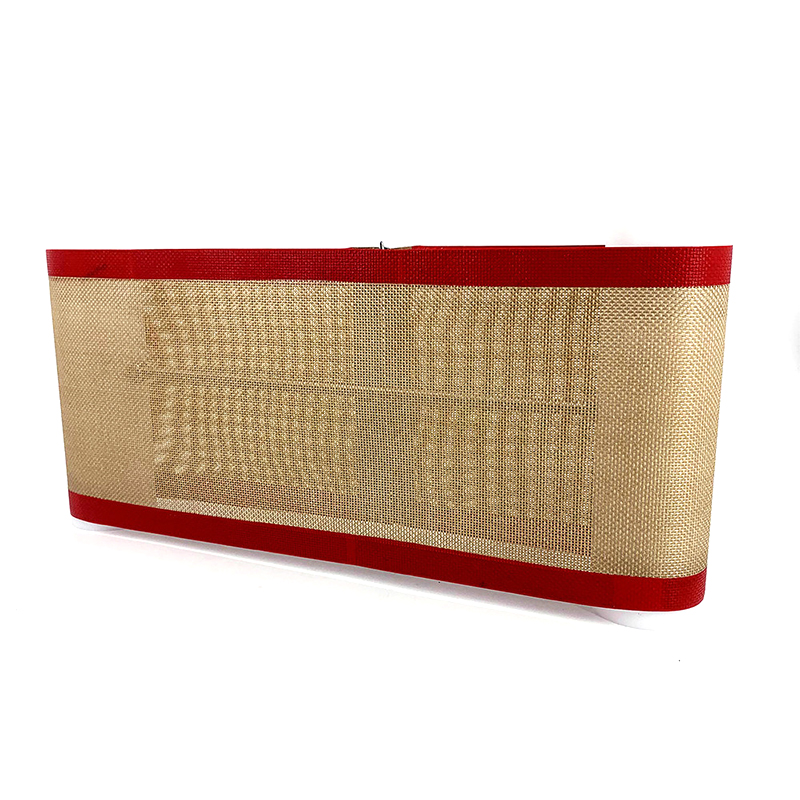
In the realm of industrial thermal processing and high-speed drying, the PTFE open mesh conveyor belt stands as a pinnacle of material science. Engineered by coating high-tenacity fiberglass or Kevlar with polytetrafluoroethylene (PTFE), these belts facilitate superior airflow while maintaining chemical inertness and extreme temperature stability. For process engineers, selecting the correct mesh size for PTFE conveyor belts is not merely a logistical choice but a critical variable that dictates the efficiency of heat transfer and moisture removal in demanding environments.
Content
- 1 1. Material Composition and Thermal Stability
- 2 2. Optimizing Airflow: Mesh Size and Drying Efficiency
- 3 3. Durability and Food Grade PTFE Mesh Belt Standards
- 4 4. Industrial Applications and Specification Selection
- 5 5. Frequently Asked Questions (FAQ)
- 5.1 1. What is the maximum temperature ahigh-temperaturee PTFE mesh belt can handle?
- 5.2 2. How to clean PTFE conveyor belts effectively?
- 5.3 3. Why use PTFE mesh for UV curing instead of solid belts?
- 5.4 4. What determines the screen printing dryer belt replacement frequency?
- 5.5 5. Can a PTFE open mesh conveyor belt be used in vacuum systems?
- 6 Industry References
1. Material Composition and Thermal Stability
The core of a high-temperature PTFE mesh belt is its woven substrate, which provides the necessary tensile strength to withstand constant mechanical stress. PTFE is utilized for its non-stick properties and its ability to operate continuously at temperatures ranging from -70°C to +260°C. Compared to standard polyester belts, PTFE open mesh conveyor belt variants offer significantly higher thermal resistance and are immune to UV, IR, and RF waves, making them the preferred choice for electronic drying and textile finishing. While polyester belts fail at temperatures exceeding 150°C, PTFE-coated fiberglass remains structurally sound, ensuring minimal elongation over time.
| Property | Standard Polyester Mesh | PTFE Open Mesh Conveyor Belt |
| Max Operating Temperature | Approx. 150°C | Up to 260°C (Continuous) |
| Chemical Resistance | Limited to specific solvents | Universal (Except molten alkali metals) |
| Non-Stick Capability | Low (Requires coatings) | Inherently High (Self-cleaning) |
2. Optimizing Airflow: Mesh Size and Drying Efficiency
The "Open Mesh" designation refers to the aperture size within the weave, typically ranging from 1mm x 1mm to 10mm x 10mm. Selecting the best mesh size for industrial drying depends on the particle size of the product and the required CFM (Cubic Feet per Minute) of the drying system. A 4mm x 4mm mesh is the industry standard for general textile and screen printing, whereas a 1mm x 1mm mesh is utilized for smaller components or delicate fabrics. Engineers must balance the open area for airflow against the structural integrity of the belt; a larger open area promotes faster drying but can reduce the belt's resistance to edge fraying if not properly reinforced.
Comparison: Mesh Aperture and Performance Impact
Large apertures maximize convective heat transfer but offer less support for small-sized products, whereas tight weaves provide a stable platform at the cost of increased drying time.
| Mesh Aperture | Airflow Efficiency | Product Support |
| 1mm x 1mm | Moderate | Excellent (Small parts) |
| 4mm x 4mm | High | Standard (Bulk materials) |
| 10mm x 10mm | Maximum | Low (Large items only) |
3. Durability and Food Grade PTFE Mesh Belt Standards
In the food processing industry, hygiene and safety are paramount. A fofood-gradeTFE mesh belt must comply with stringent regulations, ensuring that no toxic chemicals migrate into food products during dehydration or flash-freezing. These belts are inherently resistant to oils and fats, preventing bacterial buildup. When evaluating PTFE mesh belt vs stainless steel mesh, the PTFE variant offers a significant advantage in weight reduction and energy savings. Stainless steel belts are prone to metal fatigue and are significantly heavier, which increases power consumption for the drive motors, while PTFE belts provide a non-marring surface that protects delicate food items from metal contamination.
Comparison: Maintenance and Operational Lifespan
While stainless steel is exceptionally durable, the ease of cleaning PTFE conveyor belts significantly reduces downtime in high-volume production lines.
| Feature | Stainless Steel Mesh | Food Grade PTFE Mesh Belt |
| Weight | Heavy (High motor load) | Lightweight (Energy efficient) |
| Cleaning Process | Time-intensive (Requires chemicals) | Simple (Steam or wipe clean) |
| Risk of Fatigue | High (Cold work hardening) | Low (Flexible composite) |
4. Industrial Applications and Specification Selection
The versatility of the PTFE open mesh conveyor belt allows it to serve various sectors, from PTFE mesh belts for textile drying to specialized UV curing processes. In the textile industry, the belt must resist high-tension pull and chemical exposure from dyes. In screen printing dryer belt replacement scenarios, the focus shifts to dimensional stability to ensure that the belt does not "track" or drift off the rollers. For engineers, determining why usto e PTFE mesh for UV curing often comes down to the material's transparency to ultraviolet light, ensuring that the underside of the product receives consistent exposure, leading to a uniform cure across the entire surface.
Advanced Specification Factors:
- Joint and Seam Selection: Options include Alligator, Bullnose, or Spiral seams, depending on the required flexibility.
- Edge Reinforcement: Utilizing PTFE film or glass cloth tracking studs to prevent lateral movement.
- Antistatic Properties: Black PTFE belts are carbon-loaded to dissipate static electricity in dry environments.
5. Frequently Asked Questions (FAQ)
1. What is the maximum temperature ahigh-temperaturee PTFE mesh belt can handle?
Most standard PTFE mesh belts are rated for continuous operation at 260°C (500°F). For short bursts, they can withstand slightly higher temperatures, but prolonged exposure above this limit will degrade the PTFE coating.
2. How to clean PTFE conveyor belts effectively?
Thanks to their non-stick surface, most residues can be removed with a mild detergent and warm water or low-pressure steam. Avoid using abrasive tools or harsh metallic scrapers that could damage the PTFE layer.
3. Why use PTFE mesh for UV curing instead of solid belts?
Open mesh allows for the evacuation of heat and gases generated during the curing process. Additionally, it permits the curing of coatings from both sides if the system is designed with reflective surfaces beneath the belt.
4. What determines the screen printing dryer belt replacement frequency?
The lifespan depends on operating temperature, tension, and chemical exposure. Regularly checking for edge wear and seam integrity can help predict replacement needs before a failure occurs.
5. Can a PTFE open mesh conveyor belt be used in vacuum systems?
Yes, provided the mesh size is compatible with the vacuum suction power. It is frequently used in vacuum-assisted drying for lightweight materials to keep them flat on the belt surface.
Industry References
- Material Safety Data Sheet (MSDS) for Polytetrafluoroethylene Coatings.
- International Standards for Food Grade Conveyor Systems (ISO 21469).
- Technical Manual for Fiberglass Textile Composites in Thermal Applications.
Message Us Right Now!

- Phone: +86-18651171105
- Fax: +86-18651171105
- Email: yaxing@yaxing.com
- Address: No. 18, Yongxin East Road, Gaogang District, Taizhou City, Jiangsu Province, China.
Copyright © Yaxing Plastic Industry Co., Ltd. All Rights Reserved. Custom High-End Precision PTFE Series Products Manufacturers 