

 English
 Español
 русский

High-Dielectric Skived PTFE Film vs Kapton (PI) Film: Electrical & Thermal Limits
When a component must withstand high voltage and continuous heat, design engineers usually compare two film families: skived PTFE film and polyimide (PI) film, the latter widely known by the trade name Kapton. Both are high-temperature insulating films, yet their chemistry, structure, and performance envelopes are distinctly different.
Skived PTFE film is mechanically peeled from a compression-molded PTFE billet, preserving an ultra-low dielectric constant and exceptional chemical inertness. Polyimide film is cast from a polyamic acid precursor and cured into a tough amber film with outstanding short-term heat tolerance.
This guide compares high-dielectric skived PTFE film against Kapton (PI) film on two decisive criteria - electrical insulation and thermal limits - then provides a practical selection framework for high-voltage, high-frequency, and high-temperature designs.
Content
- 1 Material Platforms: Skived PTFE Film vs. Polyimide (PI) Film
- 2 Electrical Insulation: Dielectric Strength, Constant, and Dissipation Factor
- 3 Thermal Limits: Continuous Ratings, Peak Excursions, and Failure Modes
- 4 Mechanical Strength, Chemical Resistance, and Environmental Durability
- 5 Application-Based Selection Guide
- 6 Frequently Asked Questions
- 7 Final Recommendation
Material Platforms: Skived PTFE Film vs. Polyimide (PI) Film
Skived PTFE virgin film begins as a compression-molded and sintered PTFE billet. A precision blade skives continuous thin layers from the revolving billet, producing a dense, uniform film with a characteristic fibrillar microporous structure. Because the process uses no melt extrusion or additives, the finished film retains PTFE's natural dielectric, thermal, and chemical properties.
Polyimide film, commonly associated with the Kapton brand, is made by casting a polyamic acid solution onto a carrier band and curing it in high-temperature ovens. The imidization reaction builds strong aromatic rings that give PI film high tensile strength and no true melting point. The trade-offs are a higher dielectric constant and a measurable moisture absorption rate.
Both materials qualify for the highest thermal classes of organic insulation, but they answer different engineering questions.
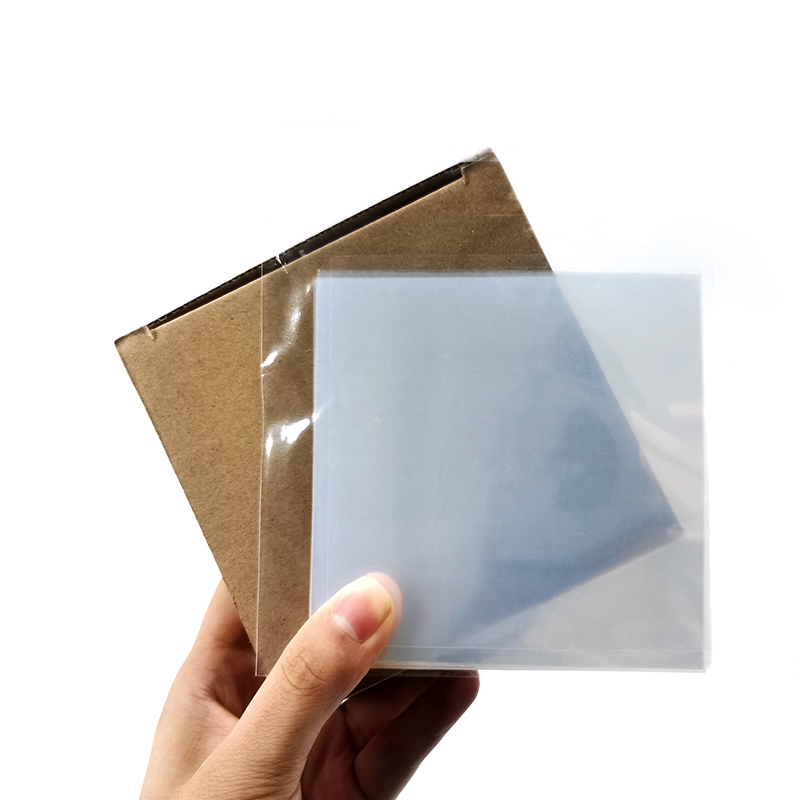
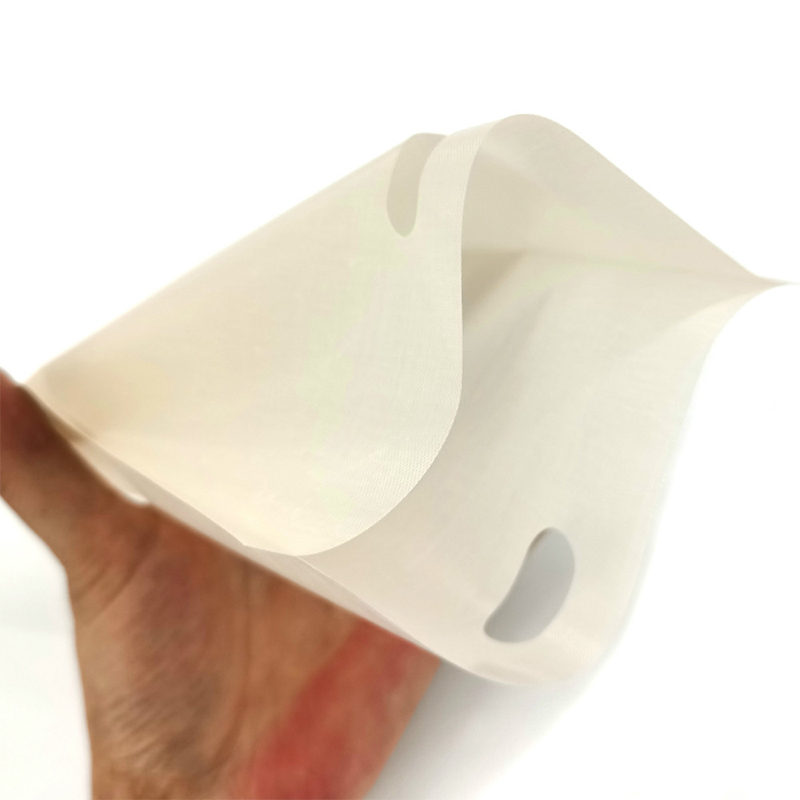 Skived Virgin PTFE Film with High Dielectric StrengthThis skived PTFE film offers tight thickness tolerances and high dielectric strength, making it a strong candidate for motor, transformer, and flexible circuit insulation where low dielectric constant matters.View Product →
Electrical Insulation: Dielectric Strength, Constant, and Dissipation Factor
High-dielectric in skived PTFE film refers to high dielectric strength combined with a very low dielectric constant. A thin skived PTFE film can deliver around 6,000 V/mil of dielectric strength, comparable to polyimide film and far above ordinary insulation films. Both are suitable for motors, transformers, cable wraps, and flexible circuits.
The bigger difference appears in signal-level performance. Skived PTFE film holds a dielectric constant of about 2.0 and a dissipation factor below 0.0003 across a wide frequency range, while polyimide sits near 3.4 with dissipation in the 0.002-0.01 range. Lower dielectric constant reduces capacitance and speeds signal propagation; lower dissipation reduces heating at high frequencies. For microwave, RF, and high-speed digital insulation, PTFE is therefore the stronger candidate.
Volume resistivity follows the same trend. Skived PTFE film typically exceeds 1018 ohm-cm, while polyimide is rated near 1016 ohm-cm. In humid environments the gap widens because PTFE absorbs essentially no moisture, whereas PI film can take up 1.3-2.8% humidity that lowers its surface insulation resistance.
| Electrical Property | Skived PTFE Film | Polyimide (PI) Film |
|---|---|---|
| Dielectric constant (1 kHz) | 2.0-2.1 | 3.4-3.5 |
| Dissipation factor (1 MHz) | 0.0002-0.0004 | 0.002-0.01 |
| Dielectric strength (1 mil film) | ~6,000 V/mil | ~7,700 V/mil |
| Volume resistivity | >1018 ohm-cm | >1016 ohm-cm |
| Moisture absorption | <0.01% | 1.3-2.8% |
Selection takeaway: if the design goal is low dielectric loss, stable capacitance, or reliable insulation under humidity, skived PTFE film has a measurable advantage. If maximum dielectric strength at very thin gauge is the only criterion, polyimide is marginally stronger.
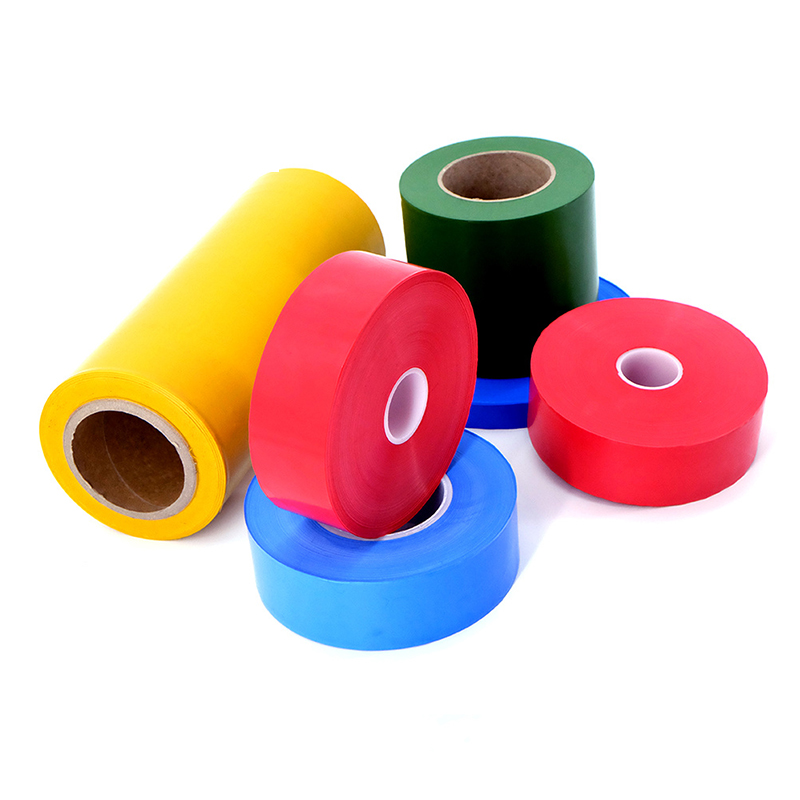
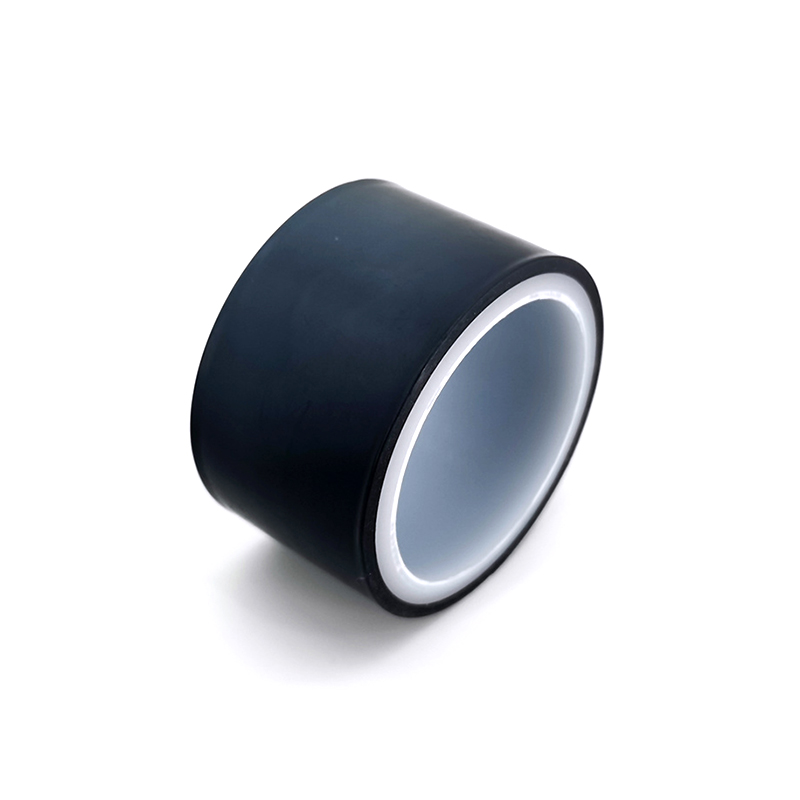 PTFE Pressure Sensitive Adhesive TapesThese adhesive tapes combine skived virgin PTFE film with high-modulus backing, available in various thicknesses and adhesion levels, suited for non-stick surfaces and heat-sealing applications.View Product →
Thermal Limits: Continuous Ratings, Peak Excursions, and Failure Modes
Both films are rated for continuous service at approximately 260 °C, placing them in the highest class of organic insulations. The differences appear at the extremes.
Skived PTFE film operates continuously from about -200 °C to 260 °C. Its crystalline melting point is 327 °C, and beyond that temperature the film softens and loses dimensional stability. Sustained exposure above roughly 300 °C accelerates decomposition, so PTFE should not be used near its melt zone. Within its rated envelope, however, PTFE retains electrical properties exceptionally well.
Polyimide has no melting point; it degrades gradually above about 500 °C and can survive short excursions to 400 °C that would destroy PTFE. PI also remains useful down to cryogenic temperatures near -269 °C. For long-term continuous duty, however, polyimide is normally derated to 240-260 °C, very close to PTFE, and it oxidizes slowly above 300 °C. No single film wins every thermal scenario.
For more background, read why skived PTFE virgin films perform well in high-temperature environments.
Mechanical Strength, Chemical Resistance, and Environmental Durability
Mechanical and environmental factors often decide the final choice.
Polyimide is far stronger: PI film reaches 220-240 MPa tensile strength, while skived PTFE film is in the 20-35 MPa range. PTFE also creeps under sustained pressure and must be supported in structural roles, whereas PI handles repeated flexing, which is why flexible circuits rely on polyimide.
Chemically, the positions reverse. PTFE is inert to nearly all acids, bases, solvents, and oxidizers, making it reliable inside battery packs, chemical sensors, and refinery equipment. Polyimide is attacked by hot caustic solutions and strong acids, and it hydrolyzes under high humidity at elevated temperatures.
Under ionizing radiation, polyimide survives far higher doses than PTFE. PTFE counters with the lowest surface energy and coefficient of friction of nearly any solid, giving non-stick, self-lubricating insulation in sliding assemblies.
Bonding also differs. PI bonds easily with common adhesives, while PTFE needs surface modification, usually chemical etching, before adhesives or printing will adhere.
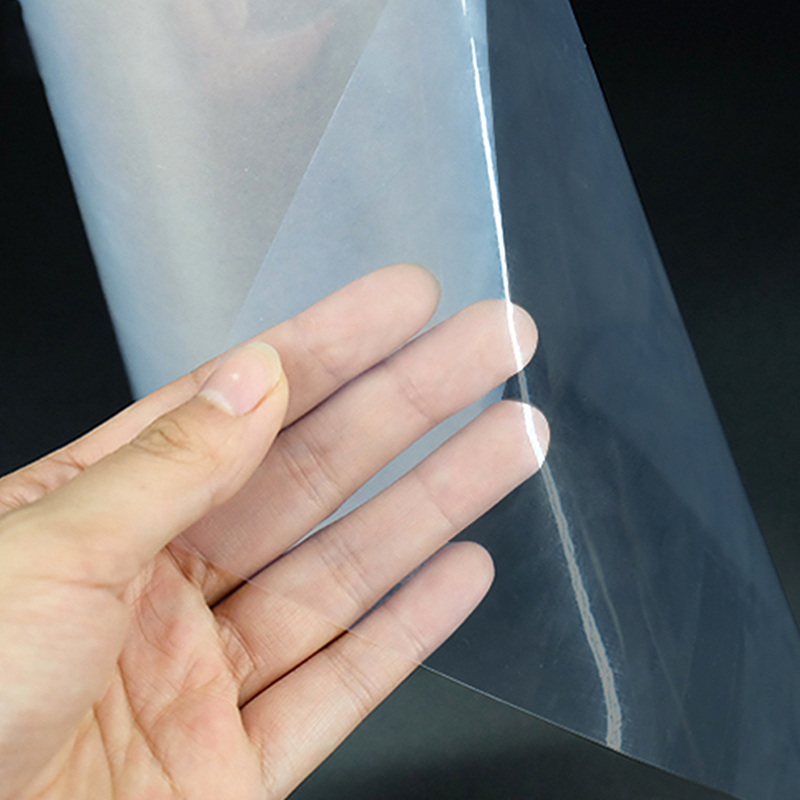 Etched PTFE Film for Adhesive BondingSodium naphthalene treatment enhances adhesion to metals, rubber, and other substrates, enabling use in high-temperature tapes, PTFE-metal composites, and low-friction sliding mechanisms.View Product →
Application-Based Selection Guide
Choose by the dominant design constraint rather than by datasheet alone.
High-frequency insulationHumid environmentsChemical exposureNon-stick and low friction
Choose skived PTFE film when:
- Dielectric constant below 2.2 and dissipation factor below 0.0005 are required
- Insulation will face condensation, humidity, or direct chemical splash
- Continuous operating temperature up to 260 °C is required and peak excursions remain below 300 °C
- A release surface, low friction, or self-lubricating contact is desirable
Choose polyimide (PI) film when:
- Short peak temperatures above 300 °C or cryogenic exposure near -269 °C are expected
- Mechanical strength, flex endurance, or thin-gauge toughness is the critical property
- The insulation must survive high-dose radiation
- Direct adhesive bonding of the film surface is required
For most high-voltage, high-frequency, and high-temperature insulation duties below 260 °C, skived PTFE film offers the best balance: one of the lowest dielectric constants in solid insulators, excellent thermal stability, and unmatched resistance to moisture and chemicals.
Frequently Asked Questions
Q1: Is skived PTFE film a better electrical insulator than Kapton (PI) film?
Both are world-class insulators. Skived PTFE film provides a lower dielectric constant, lower dissipation factor, and higher volume resistivity, making it better for high-frequency and moisture-exposed insulation. Polyimide film has slightly higher dielectric strength at very thin gauges and stronger mechanical properties at peak temperature.
Q2: What is the maximum continuous operating temperature of skived PTFE film?
Skived PTFE virgin film is rated for continuous service at 260 °C, with limited excursions to roughly 300 °C possible. Polyimide film is usually rated at 240-260 °C continuous, so the practical continuous thermal limits are similar.
Q3: Does Kapton handle higher heat than PTFE?
For short peak excursions, yes. Polyimide has no melting point and can tolerate brief exposure around 400 °C, while PTFE melts at 327 °C. For steady long-term service, both films converge near 260 °C.
Q4: What does "high-dielectric" mean for skived PTFE film?
In this context, high-dielectric refers to high dielectric strength: the film's ability to withstand thousands of volts per mil before breakdown. Skived PTFE film combines that high breakdown resistance with an ultra-low dielectric constant of about 2.0, a combination few insulating films can match.
Final Recommendation
High-dielectric skived PTFE film and Kapton (PI) film both belong at the top of the electrical insulation pyramid. The deciding factors are the operating envelope and the environment, not raw performance alone.
Specify skived PTFE film when the application demands low dielectric loss, stable capacitance, exposure to moisture or chemicals, and continuous temperature up to 260 °C. Specify polyimide film when the design needs mechanical toughness, radiation resistance, cryogenic capability, or short excursions above 300 °C.
In most high-frequency, high-voltage, and high-temperature insulation scenarios, skived PTFE film delivers the better all-round technical value over its full thermal lifetime.
Message Us Right Now!

- Phone: +86-18651171105
- Fax: +86-18651171105
- Email: yaxing@yaxing.com
- Address: No. 18, Yongxin East Road, Gaogang District, Taizhou City, Jiangsu Province, China.
Copyright © Yaxing Plastic Industry Co., Ltd. All Rights Reserved. Custom High-End Precision PTFE Series Products Manufacturers 