

 English
 Español
 русский
PTFE Coated Open Mesh Fabrics vs Solid PTFE Glass Fabrics: Airflow, Heat, Drying
For engineers and production managers running drying, curing, and continuous coating lines, the choice between PTFE coated open mesh fabrics and solid PTFE glass fabrics is rarely straightforward. Both materials start from the same fiberglass substrate and the same PTFE resin, yet their structural designs produce fundamentally different behavior in airflow, heat transfer, and drying efficiency. This guide compares the two constructions in practical terms to help you match the fabric to your process.
Content
What Are PTFE Coated Open Mesh Fabrics and Solid PTFE Glass Fabrics?
PTFE coated open mesh fabrics are woven from fiberglass yarns and then processed through multiple PTFE dip-coating and sintering cycles that preserve the open grid architecture. Each yarn is fully encapsulated in PTFE, and the intersections are fused and locked, leaving clear openings between the threads. The result is a breathable, flexible, high-temperature release material with open areas typically ranging from 50 to 70 percent. This openness is not a design compromise; it is the core functional feature that drives airflow and moisture removal.
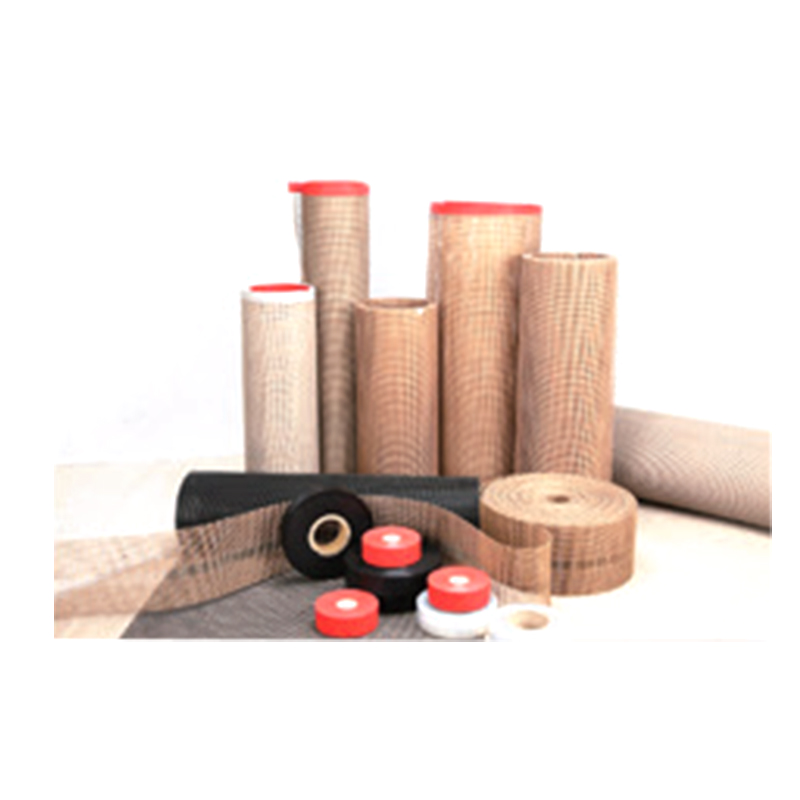 PTFE Coated Open Mesh Fiberglass Fabric for High-Temperature DryingThis breathable open-mesh fabric is engineered for air circulation and moisture removal in dryers, offering a non-stick surface, chemical inertness, and continuous service from -70°C to 260°C. Its open structure suits printed goods, non-wovens, and shrink-wrap tunnels.View Product →
Solid PTFE glass fabrics follow a similar coating route but are built with a continuous, pinhole-free PTFE layer that completely encapsulates the weave. Multiple coating passes and precisely controlled sintering create a smooth, airtight membrane across the full surface. Solid fabrics excel where a barrier is required: chemical protection, electrical insulation, and full-surface release. However, that same continuity blocks air passage, a fact that matters directly in drying applications.
Key Differences at a Glance
The table below summarizes the most important differences between the two fabric types.
| Property | PTFE Coated Open Mesh | Solid PTFE Glass Fabric |
|---|---|---|
| Air Permeability | High | None |
| Dominant Heat Transfer Mode | Convection and radiation | Contact conduction |
| Drying Speed | Fast | Moderate |
| Release Property | Good on yarns, textured surface | Excellent, smooth full surface |
| Chemical Resistance | Good | Excellent |
| Mechanical Strength | Moderate | Higher |
| Typical Applications | Drying, curing, conveying | Insulation, sealing, lining |
Airflow: The Defining Difference
The most immediate difference is air permeability. Open mesh fabrics allow process air, steam, and volatile vapors to pass directly through the material. In a through-air dryer, hot air impinges on the product, passes through the mesh belt, and carries moisture away in one continuous path. This direct airflow substantially reduces drying time and produces a more uniform moisture profile across the product width.
Solid fabrics cannot do this. Because the PTFE film is continuous, air can only move around the edges of the fabric. For processes that rely on impingement or cross-flow air, a solid fabric becomes a barrier rather than a helper. It can also create a risk of moisture pooling on the underside of the belt in condensation-prone processes, which slows drying further and may affect product quality.
Heat Transfer Characteristics
Heat transfer behavior follows the same structural logic. Open mesh fabrics combine convective and radiative heat transfer. Hot air passes through the open area and strikes the product surface directly, so the thermal energy does not have to travel through the fabric first. Meanwhile, the coated yarns radiate heat over their surfaces, contributing to more even heating of the product.
Solid PTFE glass fabric transfers heat primarily by conduction from a heated surface into the product through direct contact. This is acceptable for contact heating arrangements, but it is slower in convective systems. Equal plenum temperatures therefore deliver a lower effective heat flux through a solid fabric than through an open mesh construction.
Drying Efficiency in Practice
Drying efficiency is where the two materials separate most clearly. In applications such as nonwoven drying, textile finishing, food dehydration, and adhesive or coating curing, open mesh fabric consistently delivers shorter residence times and more even moisture profiles. The combination of free airflow and vapor passage means water leaves the product faster and more completely.
Solid fabric still has a place in contact drying and in processes where an impermeable barrier is required, such as laminating, sealing, and thermal insulation. But when the goal is to remove moisture from a moving web quickly and uniformly, open mesh construction is the stronger contender.
How to Choose the Right Fabric
Selecting the right material comes down to what the process needs most: breathability or a barrier.
- Choose PTFE coated open mesh fabric when the line relies on through-air drying, curing, cooling, or product release with air assistance, or when minimizing the contact area between the belt and the product is critical.
- Choose solid PTFE glass fabric when the process demands an impermeable surface, maximum chemical resistance, full-surface non-stick release, or electrical and thermal insulation.
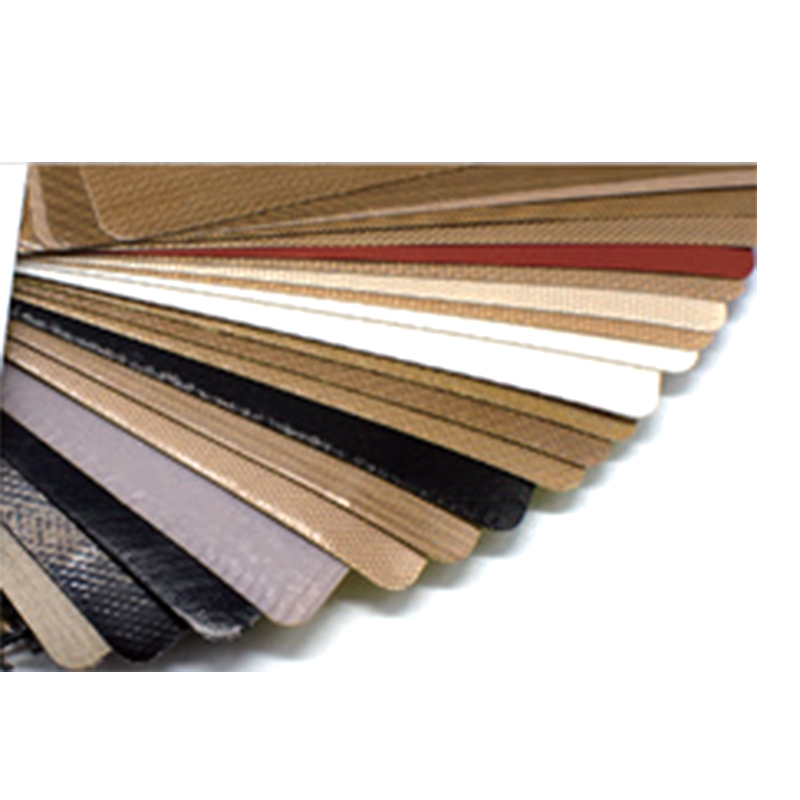 PTFE Single Side Coated Fiberglass Fabric for Barrier ApplicationsThis fabric has PTFE on one side while preserving the raw fiberglass on the other, making it suitable for applications needing a release or barrier surface without full encapsulation. Available in rolls, sheets, and custom belting up to 5,000mm wide.View Product →
For a closer look at the production-side benefits, read our discussion of why PTFE coated open mesh fabrics improve the continuity of high-temperature production processes before finalizing your material selection.
Frequently Asked Questions
Q1: Can PTFE open mesh fabric withstand the same temperatures as solid PTFE glass fabric?
Yes. Both constructions are rated for continuous service from -70°C to 260°C, with short-term exposure up to 300°C possible. The temperature resistance comes from the PTFE resin and fiberglass substrate, not from the structure. The choice between open mesh and solid should therefore be based on airflow, release, and barrier requirements rather than temperature limits.
Q2: Which fabric provides better release for sticky products?
Solid PTFE glass fabric provides better full-surface release because the continuous film has no open edges or yarn-level texture. Open mesh fabric releases well on the coated yarns themselves, but the product can contact the carrier surface beneath the mesh in some applications. If a perfectly smooth, non-stick face is required, the solid construction is preferable.
Q3: Which fabric has higher mechanical strength in tension?
Solid PTFE glass fabric generally offers higher tensile strength and better tear resistance because the continuous PTFE layer distributes stress across the full surface. Open mesh fabric has a correspondingly lower load-bearing area. In high-tension conveyor applications, both can be engineered with appropriate fiberglass weights, but the solid construction is the more conservative choice for heavy mechanical loads.
Q4: How does open area percentage affect drying performance?
A higher open area increases airflow and drying speed, but it also reduces the contact area and mechanical support available to the product. The optimal percentage depends on the product weight, moisture content, and line speed. Many drying processes perform well with open areas in the 50 to 70 percent range, and trials are recommended when changing fabric specifications.
Conclusion
When the process demands fast, uniform drying and free airflow, PTFE coated open mesh fabrics are the proven choice. When the process demands a continuous, impermeable release surface or a protective barrier, solid PTFE glass fabrics take the lead. Evaluating airflow, heat transfer, and drying efficiency before selection will prevent costly line modifications later and will help you achieve consistent product quality at a lower energy cost.
Message Us Right Now!

- Phone: +86-18651171105
- Fax: +86-18651171105
- Email: yaxing@yaxing.com
- Address: No. 18, Yongxin East Road, Gaogang District, Taizhou City, Jiangsu Province, China.
Copyright © Yaxing Plastic Industry Co., Ltd. All Rights Reserved. Custom High-End Precision PTFE Series Products Manufacturers 