

 English
 Español
 русский
Skived PTFE Virgin vs Etched PTFE Film: Surface Energy, Wetting and Bonding
Engineers and procurement teams frequently ask us to compare skived PTFE virgin film and etched PTFE film. Both products are manufactured from polytetrafluoroethylene, yet they differ fundamentally in surface energy, wetting behavior, and adhesive bonding performance. These three surface-related properties determine whether a film will bond to adhesives, accept printing, or serve as a reliable release surface.
As an experienced fluoroplastic manufacturer, we produce both film formats in-house, and we help customers across industries choose the right material for gaskets, flexible circuits, release liners, and bonded assemblies. You can browse the full product range on our website to explore PTFE films and related fluoroplastic materials. This article provides a side-by-side technical comparison based on practical engineering criteria.
Content
What Are Skived PTFE Virgin Film and Etched PTFE Film?
Skived PTFE Virgin Film
Skived PTFE virgin film is produced by peeling thin, continuous layers from a compressed and sintered PTFE billet using a precision blade. The term "virgin" means the material contains no fillers, pigments, or processing aids, so it preserves PTFE's full intrinsic performance: maximum chemical inertness, broad temperature tolerance, high dielectric strength, and an extremely low coefficient of friction. Its surface energy is roughly 18 to 20 mN/m, one of the lowest values among solid polymers. That is why water beads up into nearly perfect droplets and why conventional adhesives will not wet the surface.
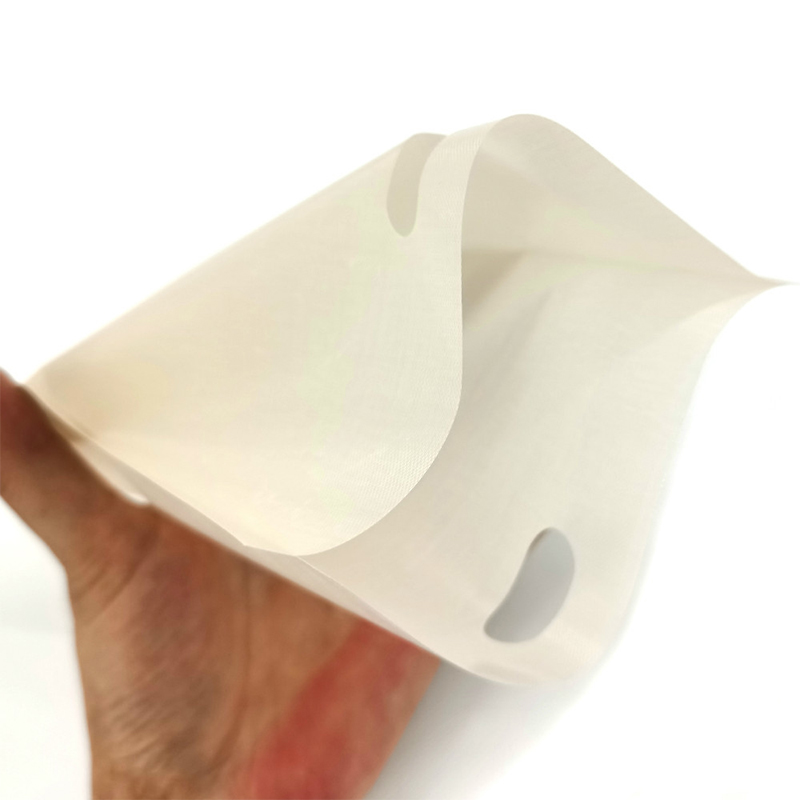 Skived PTFE Virgin Film for High-Purity Insulation ApplicationsThis skived PTFE virgin film offers a smooth, filler-free surface with full chemical resistance and thermal stability. It suits electronic insulation, seals, medical devices, and release liners, and its precise thickness tolerances make it a versatile material choice.View Product →
Etched PTFE Film
Etched PTFE film begins as a skived or cast PTFE film and then receives a chemical surface treatment. A sodium-based etchant removes fluorine atoms from the outermost molecular layer and introduces oxygen-containing functional groups. The treatment also creates a microscopically rough texture. Together these changes raise the surface energy to 40 to 52 mN/m, dramatically improving wettability and creating anchoring sites for adhesives. The treated surface typically appears dark brown or bronze, while the bulk film retains its chemical resistance and thermal stability.
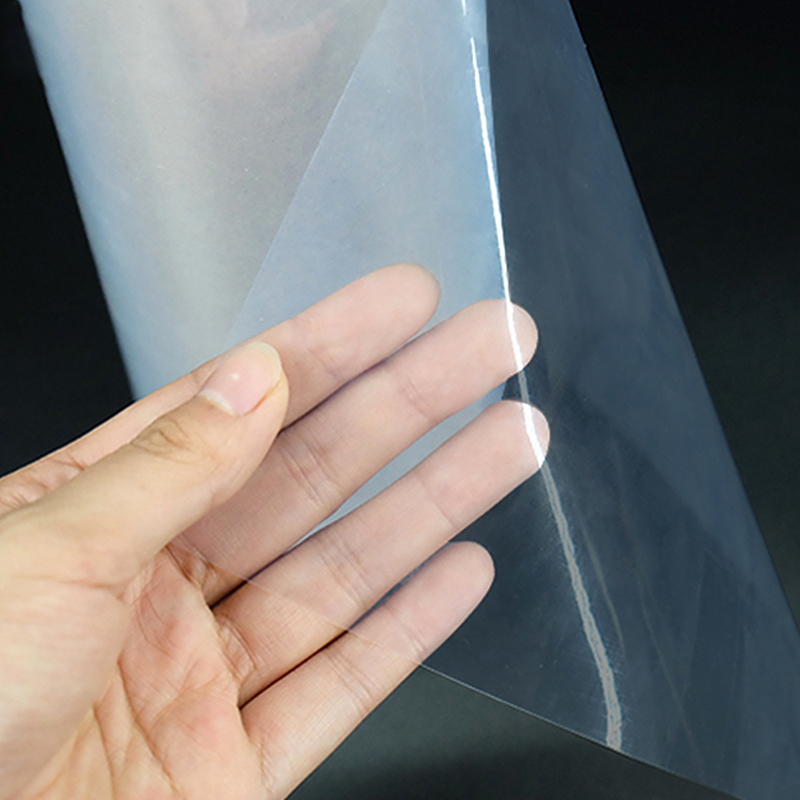 Etched PTFE Film with Sodium Naphthalene Surface TreatmentThis chemically etched PTFE film gains a high surface energy for strong adhesive bonding while retaining PTFE's low friction and thermal resistance. It enables reliable lamination to metals, rubber, and other substrates for demanding industrial uses.View Product →
Surface Energy: The Property That Controls Bonding
Surface energy is the thermodynamic quantity that governs how liquids spread across a solid. When a liquid has a lower surface tension than the solid's surface energy, it wets the surface and forms continuous contact. When the solid's surface energy is lower, the liquid beads up and cannot establish the intimate contact required for adhesion. PTFE sits at the extreme low end of this scale, which is why untreated film resists wetting and bonding so effectively.
The table below compares the typical surface characteristics of both film formats.
| Surface Property | Skived PTFE Virgin Film | Etched PTFE Film |
|---|---|---|
| Surface Energy (mN/m) | 18-20 | 40-52 |
| Water Contact Angle | 108-115 degrees | 50-75 degrees |
| Wettability | Very Low | Good |
| Adhesive Bondability | Poor Without Treatment | Excellent |
The chemical explanation is straightforward. PTFE is composed of extremely stable carbon-fluorine bonds that are highly non-polar. This structure gives the material its non-stick character. Etching replaces some fluorine atoms with polar functional groups such as carbonyl and carboxyl groups, increasing the surface energy and giving adhesives a chemically receptive surface.
Wetting Behavior in Practice
Wetting is the first step in any bonding, printing, or coating process. If a liquid does not wet a surface, no amount of adhesive strength will create a durable joint. Contact angle measurement is the standard way to quantify wetting behavior.
Wetting on Skived PTFE Virgin Film
On skived PTFE virgin film, the water contact angle typically measures 108 to 115 degrees. Liquids with high surface tension, including most adhesives and inks, form droplets that sit on top of the film with minimal contact area. This behavior is ideal for release applications such as heat-sealing belts, mold liners, and non-stick covers, but it is a serious obstacle for any process that requires adhesive bonding.
Wetting on Etched PTFE Film
Etching lowers the contact angle to roughly 50 to 75 degrees. Epoxy, acrylic, and cyanoacrylate adhesives now spread evenly across the surface and flow into the micro-roughened layer created by the etchant. Once cured, the adhesive interlocks mechanically with these microscopic features while also forming chemical bonds with the polar groups. This is why etched PTFE film is the standard choice for bonding applications. Our detailed analysis of etched PTFE film bonding explains the surface mechanism at the microscopic level.
Key takeaway: surface energy controls whether a liquid will wet the film; the etched micro-roughness and polar chemistry control whether that wetting becomes a strong, durable bond.
Adhesive Bonding Comparison
Bonding to Skived PTFE Virgin Film
Direct adhesive bonding to untreated skived PTFE virgin film rarely succeeds. The surface energy of 18 to 20 mN/m is simply too low for adhesives to establish the molecular contact needed for adhesion. Even high-performance structural adhesives will peel away easily. Engineers typically use one of these workarounds: mechanical fastening with rivets or clamps, thermal welding, plasma or corona pretreatment, or an on-site sodium etch. Every option adds process complexity and cost, and the consistency of results depends heavily on operator skill and equipment quality.
Bonding to Etched PTFE Film
Etched PTFE film eliminates the surface preparation bottleneck. Epoxy adhesives generally deliver the highest bond strengths, and lap shear or peel tests show values several times higher than untreated PTFE. The etched layer is mechanically durable enough for normal handling during assembly, but it should be protected from UV light, solvent contamination, and excessive abrasion until the bond is made. When stored and handled correctly, etched PTFE film provides a consistent, bondable surface that fits smoothly into production.
Common adhesive bonding applications for etched PTFE film include flexible circuits, membrane switches, gaskets bonded to metal flanges, and PTFE liners for chemical processing equipment.
Application Guide: Which Film Should You Choose?
Choose Skived PTFE Virgin Film When
- The film must remain non-stick for release liners, mold liners, or heat-sealing belts
- Chemical purity and zero extractables are critical specifications
- Electrical insulation with consistent dielectric properties is required
- The part will be mechanically clamped, welded, or fastened rather than adhesively bonded
- You need a wide thickness range with good dimensional stability for gaskets, diaphragms, or tape
Choose Etched PTFE Film When
- The film must be bonded to metal, plastic, or composite substrates
- Your assembly requires structural adhesive strength
- The application involves flexible printed circuits, membrane switches, or sensor lamination
- You want to eliminate an in-house sodium etch or plasma treatment step
- Printing, marking, or coating will be applied directly to the film surface
Both film types are available in multiple thicknesses and widths. If you are unsure which format fits your process, start with the surface property requirements of your application. Non-stick and electrical insulation needs point toward skived PTFE virgin film; bonding and lamination needs point toward etched PTFE film.
Frequently Asked Questions
Q1: Can skived PTFE virgin film be bonded with adhesive?
Only after surface activation. Untreated skived film has a surface energy of 18 to 20 mN/m, which is too low for most adhesives to wet. Sodium etching, plasma treatment, or corona treatment must be applied to the bonding area first.
Q2: Does etching weaken the mechanical properties of PTFE film?
No. The etching reaction affects only the top few microns of the surface. The bulk film retains its tensile strength, elongation, chemical resistance, and temperature rating. The etched layer itself is somewhat delicate and should be protected from abrasion and UV exposure.
Q3: How long can etched PTFE film be stored before bonding?
Etched PTFE film should be bonded within three to six months of production when stored in a cool, dark, dry environment. Surface activity gradually decreases over time as airborne contaminants and oxidation affect the polar groups. Always verify wettability with a water contact angle test before bonding a stored batch.
Q4: Can both films withstand high temperatures?
Yes. Both skived PTFE virgin film and etched PTFE film can operate continuously at temperatures above 260 degrees Celsius (500 degrees Fahrenheit) because the etching treatment modifies only the surface. The temperature resistance of the base polymer remains unchanged. Remember to check the temperature rating of your adhesive as well, since most adhesives have lower service limits than PTFE.
Message Us Right Now!

- Phone: +86-18651171105
- Fax: +86-18651171105
- Email: yaxing@yaxing.com
- Address: No. 18, Yongxin East Road, Gaogang District, Taizhou City, Jiangsu Province, China.
Copyright © Yaxing Plastic Industry Co., Ltd. All Rights Reserved. Custom High-End Precision PTFE Series Products Manufacturers 