

 English
 Español
 русский
Why PTFE Fiberglass Fabric Has a Non-Stick Surface: Molecular Insights
A rubber gasket molder fights a constant battle against vulcanized rubber attaching to stainless steel. A commercial bakery burns through hundreds of parchment sheets per shift. A composite workshop watches epoxy bleed onto expensive aluminum molds. In all three cases, the solution is a sheet of woven glass fiber coated with polytetrafluoroethylene (PTFE). The reason is not a simple layer of grease, but a molecular action that prevents strong adhesion. The carbon-fluorine bond is one of the strongest in organic chemistry, and when the glass weave is saturated with PTFE resin, the resulting composite inherits a surface so non-stick that even the most aggressive adhesives release cleanly.
Content
The molecular shield: the physics of release
The non-stick property of PTFE fiberglass fabric is caused by the strong carbon-fluorine bonds in the PTFE molecule, which create a dense fluorine shield that chemically resists adhesion from other materials.
PTFE is a fluoropolymer characterized by a carbon chain wrapped in large, electronegative fluorine atoms. Critical to the release effect is the surface energy of the material. PTFE is one of the few solids known to have a surface energy significantly lower than almost everything that touches it. The construction of the shield means that forming a molecular bridge between the two surfaces costs more energy than maintaining the bond between the PTFE's own atoms.
The C-F bond is so stable and the fluorine shield so dense that contaminants cannot chemically bind to the surface. This stability gives PTFE fiberglass fabric its extraordinary release properties.
| Material | Surface Energy (dynes/cm) | Release Performance |
| PTFE | 18-20 | Excellent |
| Silicone | 24-26 | Good |
| Stainless steel | 40-50 | Poor |
| Glass | 32-40 | Poor |
How the fabric gets its non-stick layer
The non-stick layer is produced by saturating woven fiberglass with a PTFE dispersion and sintering it in ovens at 350-400 degrees Celsius, which fuses the PTFE particles into a continuous, smooth membrane.
- Glass fiber weaving: High-quality E-glass fiber is woven into a fabric using Dornier looms, providing the structural backbone.
- Heat cleaning: The woven fabric passes through a furnace at 390 degrees Celsius to burn off any organic sizing and contaminants.
- Immersion: The cleaned weave is dipped in a PTFE aqueous dispersion. The resin soaks deep into the glass fiber bundles.
- Sintering: The saturated fabric travels through a high-temperature oven, melting the PTFE and fusing it into a uniform coating.
- Repetition: The immersion and sintering cycle repeats 8-10 times to build up the desired coating thickness and density.
Taizhou Yaxing Plastic Industry Co., Ltd. has operated in the fluoroplastics industry for over 20 years. Its 16 advanced PTFE coating and drying lines, combined with imported German slicing equipment and Dornier looms, ensure the uniformity of the PTFE layer that ultimately determines final release performance.
How the non-stick effect is measured
The release effect is scientifically measured using the contact angle, where PTFE typically forms a water contact angle of about 112 degrees, indicating very low wettability.
When a droplet lands on a surface, it forms a dome shape. The angle between the surface and the droplet is the contact angle. The higher the angle, the less contact area the liquid has with the surface. PTFE is highly hydrophobic and lipophobic, leading to the highest practical contact angles, around 110-115 degrees.
The non-stick property is critical in these applications:
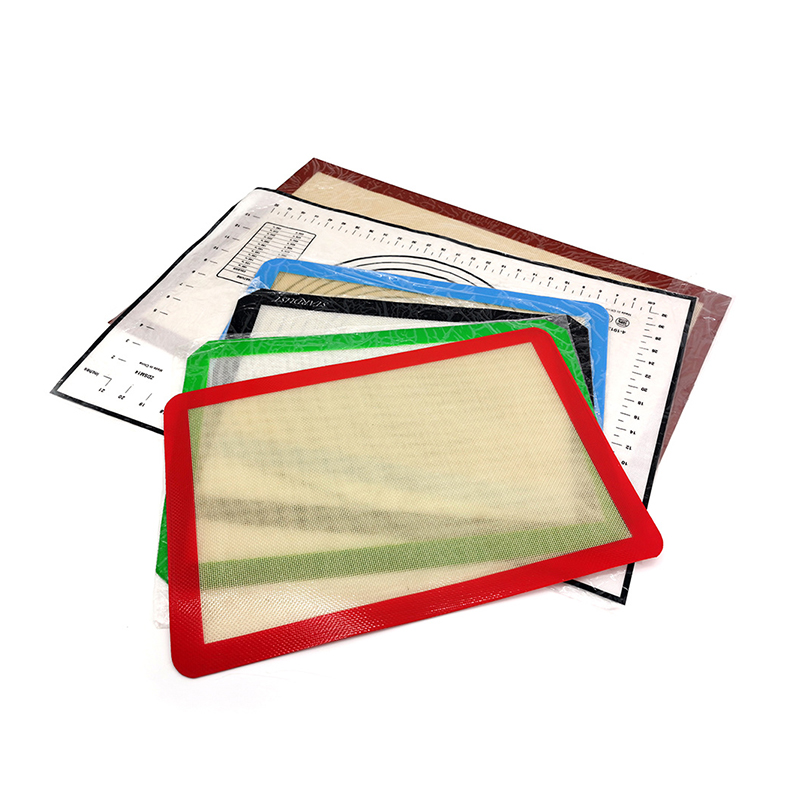
- Food processing and baking: dough, sugar, and cooking residues peel away from the baking mat.
- Heat sealing and packaging: molten plastics do not fuse to hot sealing bars.
- Industrial molding and vulcanization: cured rubber and composite resins exit the mold without residue.
Why the fiberglass substrate is essential
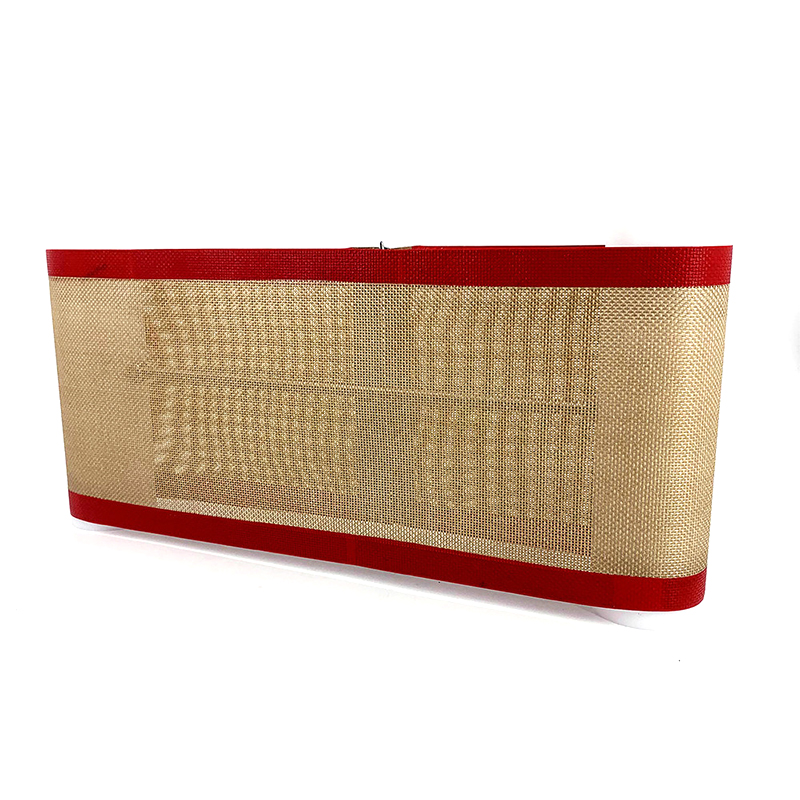
The fiberglass base provides tensile strength, dimensional stability, and thermal endurance, which are required to withstand industrial tension and temperatures without tearing.
A pure PTFE film is chemically impressive but mechanically weak. A thin film tears under traction and stretches under heat. The woven glass fiber imparts the mechanical strength. It handles the tension in conveyor belts, facilitates the handling of a release liner, and provides the dimensional stability needed for precision applications.
| Property | Pure PTFE Film | PTFE Fiberglass Fabric |
| Tensile strength | Low (tears easily) | High (handles tension) |
| Tear resistance | Low | High |
| Dimensional stability | Low (stretches) | High (stable) |
| Heat resistance | Up to 260 degrees C | Up to 260 degrees C (continuous) |
| Surface release | Excellent | Excellent |
Engineers specify single-side coated fabrics when the attachment side must remain bondable to silicone or adhesive. Double-side coating fully isolates the glass base to create the most robust release barrier.
What to look for when buying PTFE fiberglass fabric
Coating weight, weave thickness, and sintering quality are the three variables that determine how long the non-stick layer will survive in abrasive production environments.
The coating weight, measured in grams per square meter, is the most reliable indicator of non-stick durability. A heavier coating provides a thicker layer that protects the underlying glass structure. Uneven sintering can lead to tiny cracks in the PTFE layer, where sticky materials can anchor and form a bond. Verify that the supplier maintains strict temperature controls and thorough quality checks.
Informative resources can help you evaluate materials. Read how PTFE fiberglass fabric maintains its structure at high temperatures, and consult a high-temperature non-stick performance guide before specifying your order.
how PTFE fabric maintains its structure at high temperatures high-temperature non-stick performance guide Single-Side PTFE Coated Glass Fabric for High-Temperature UseThis single-side coated fiberglass fabric offers thermal stability and non-stick properties, with options for various weights and widths up to 5000mm, making it suitable for custom industrial applications where heat resistance is critical.View Product →
  PTFE Coated Open Mesh Fabric for Efficient DryingWith an open mesh design that promotes air flow, this PTFE-coated fabric is ideal for drying processes in printing, food, and electronics. It withstands temperatures from -70°C to 260°C and is FDA compliant, ensuring reliable performance in industrial drying systems.View Product →
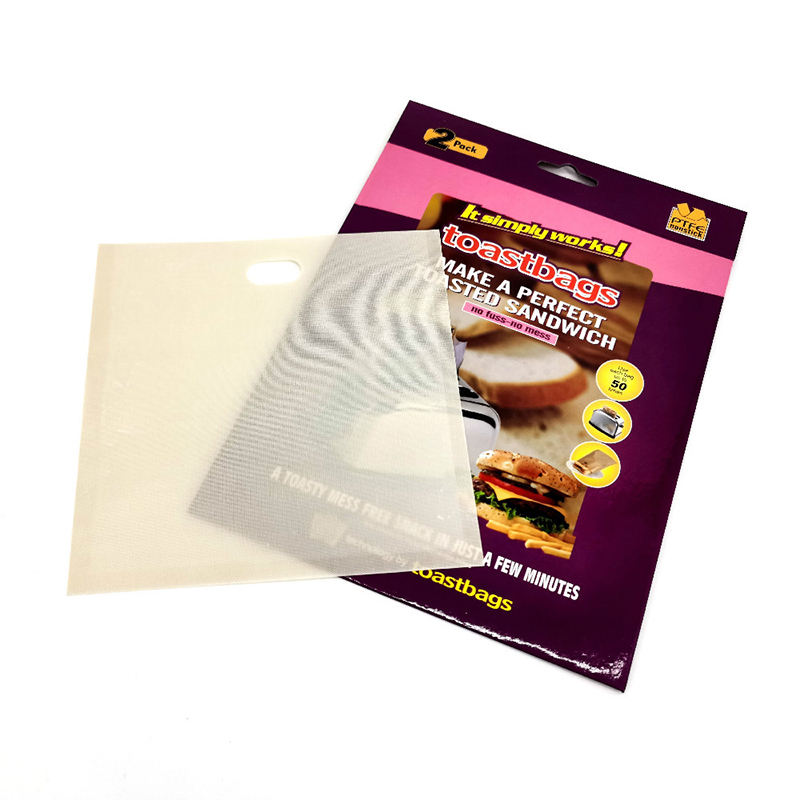
  PTFE Grill Mat and Oven Liner for Non-Stick BakingThis PTFE-lined mat prevents food from sticking during grilling or baking, can be trimmed to fit, and is dishwasher safe. Its heat-resistant construction reduces oil leakage and makes cleanup effortless, making it a practical addition to any kitchen.View Product →
FAQ
Is PTFE fiberglass fabric safe for direct food contact?
Yes, food-grade PTFE formulations are widely used for grilling mats and baking sheets. Taizhou Yaxing Plastic Industry Co., Ltd. manufactures these products using high-purity PTFE on glass fiber, which is inert and does not give off odors when used in the recommended temperature range.
Can the non-stick coating wear off?
Yes, abrasive scrubbing, sharp utensils, or sustained use above 260 degrees C will eventually damage the PTFE. The coating is durable, but mechanical abuse will shorten its release lifespan.
Does the fabric work as a release liner for rubber and epoxy?
Yes, the very low surface energy of PTFE prevents rubber, epoxy, and urethane from forming strong bonds with the surface. This makes it the industry standard for release sheets in vulcanization and composite molding.
How do I clean PTFE fiberglass fabric?
Use warm water and a soft cloth, followed by drying at low heat. Avoid abrasive pads or stiff brushes, as these can scratch the polymer coating and reduce its release efficiency.
Message Us Right Now!

- Phone: +86-18651171105
- Fax: +86-18651171105
- Email: yaxing@yaxing.com
- Address: No. 18, Yongxin East Road, Gaogang District, Taizhou City, Jiangsu Province, China.
Copyright © Yaxing Plastic Industry Co., Ltd. All Rights Reserved. Custom High-End Precision PTFE Series Products Manufacturers 