

 English
 Español
 русский
PTFE Conveyor Belts: Properties, Uses & Buying Guide
PTFE conveyor belts do a job most other belt materials can't handle at all: run continuously through high heat, resist nearly every chemical that touches them, and release from sticky materials without buildup. That combination of properties comes from the PTFE coating itself, but matching the right belt construction — mesh, solid, fiberglass-reinforced — to the actual process is what determines whether it performs as expected.
Content
PTFE Conveyor Belt Properties
| Property | Characteristic |
|---|---|
| Temperature resistance | Withstands continuous exposure from roughly -70°C up to 260°C, depending on construction |
| Non-stick surface | Extremely low friction coefficient, prevents material adhesion during processing |
| Chemical resistance | Resists nearly all industrial chemicals, acids, and solvents |
| Electrical properties | Excellent dielectric strength, used in RF and microwave applications |
| Durability | Long service life under repeated thermal cycling compared to standard rubber or fabric belts |
| Cleanability | Smooth, non-porous surface allows easy washdown and sanitation |
PTFE Coated Conveyor Belt: How It's Constructed
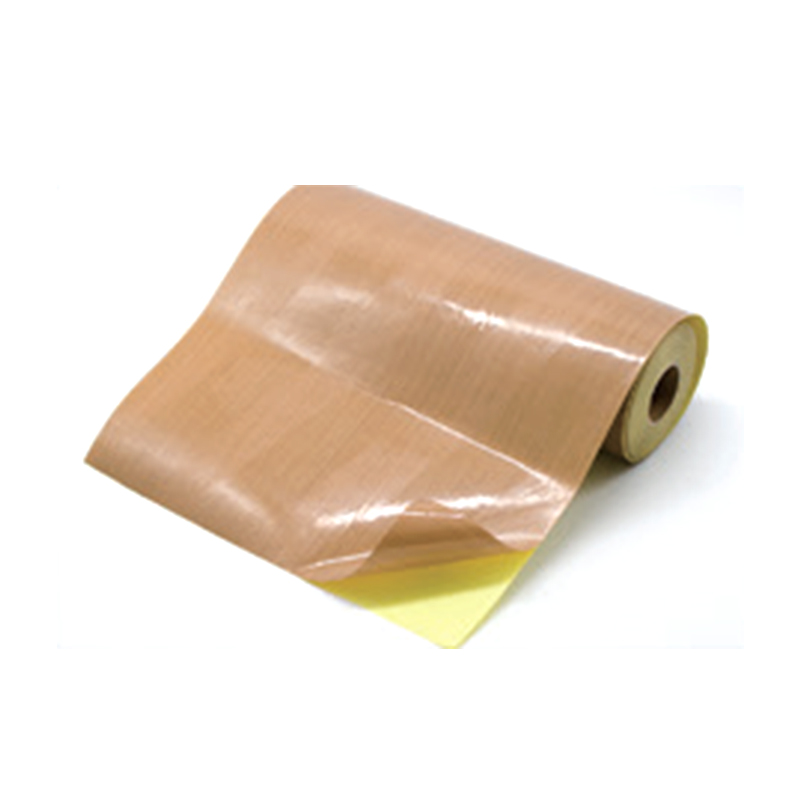
A PTFE coated conveyor belt is built around a base fabric — most commonly woven fiberglass — that's impregnated and coated with PTFE resin, then cured under heat to bond the coating into a smooth, continuous surface. The base fabric provides tensile strength and dimensional stability, while the PTFE coating delivers the non-stick, heat-resistant, and chemically inert surface properties the belt is chosen for. Coating thickness and the number of coating passes affect both durability and surface smoothness, with heavier coatings generally offering longer service life at a higher cost.
Fiberglass PTFE Conveyor Belt
Fiberglass is the standard reinforcement fabric for PTFE conveyor belts because it shares PTFE's high-temperature tolerance without degrading at the coating's curing or operating temperatures — a fabric with lower heat resistance would fail well before the PTFE coating reaches its limits. The fiberglass weave also gives the belt strength and dimensional stability under tension, resisting stretch and sag across long conveyor runs while remaining flexible enough to travel around rollers without cracking the PTFE surface.
PTFE Conveyor Belt Applications
Food Processing
Baking, drying, and freezing lines where non-stick release and washdown cleanability are essential.
Printing and Laminating
Heat-transfer printing and laminating processes requiring a smooth, heat-resistant, non-stick conveying surface.
Textile Processing
Heat-setting, drying, and coating processes where fabric passes through high-temperature zones without sticking or marking.
Packaging Sealing
Heat-sealing lines for plastic film and packaging, where the belt surface must resist adhesion from melted material.
Electronics Manufacturing
Drying and curing processes for circuit boards and components requiring a chemically inert, heat-stable surface.
Chemical Processing
Handling corrosive or reactive materials where the belt surface must resist chemical attack over repeated exposure.
PTFE Conveyor Belt for High Temperature Applications
High-temperature performance is where PTFE belting distinguishes itself most clearly from rubber or standard fabric alternatives, with continuous operating ranges commonly rated up to 260°C and short-term tolerance for brief excursions beyond that. This makes PTFE belting the standard choice for industrial ovens, drying tunnels, and heat-sealing equipment where sustained thermal exposure would degrade conventional belting materials within a short operating life. Belt thickness and fiberglass weave density both affect the practical upper temperature limit, so matching the specific belt grade to the process's actual operating temperature — not just the general PTFE temperature range — is important for reliable long-term performance.
Food Grade PTFE Conveyor Belt
Food grade PTFE belting is manufactured and certified to meet food contact safety standards, ensuring the belt surface won't leach or transfer substances into food products during processing. Beyond material certification, food grade belts are typically specified with smoother, more easily sanitized surfaces to support washdown cleaning protocols required in food processing environments, and are commonly used in baking, drying, and freezing applications where the belt has direct product contact throughout the process.
PTFE Mesh Conveyor Belt
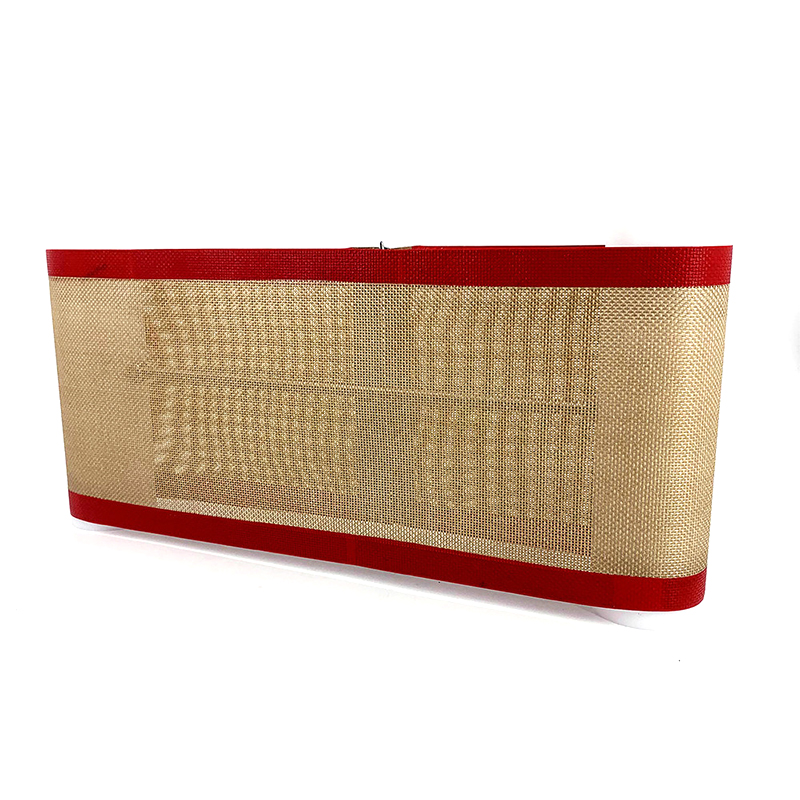
Mesh construction — an open-weave PTFE-coated fabric rather than a solid sheet — is used where airflow, moisture escape, or heat penetration through the belt is required during processing, such as drying and baking applications where hot air needs to pass through the product from below as well as above. Mesh belts trade some of the solid belt's smooth handling surface for this airflow capability, making the choice between mesh and solid PTFE belting primarily a function of whether the process needs air or heat to move through the belt itself.
How to Choose a PTFE Conveyor Belt
- Confirm the operating temperature range of the process against the specific belt grade's rated continuous and peak temperature tolerance.
- Decide between mesh and solid construction based on whether airflow or heat penetration through the belt is required.
- Check chemical exposure in the process to confirm the coating and base fabric combination will hold up over the belt's service life.
- Verify food contact certification if the application involves direct food product contact.
- Match belt thickness and fiberglass grade to the tension and load requirements of the specific conveyor system, since undersized belting stretches and wears prematurely under continuous operation.
Message Us Right Now!

- Phone: +86-18651171105
- Fax: +86-18651171105
- Email: yaxing@yaxing.com
- Address: No. 18, Yongxin East Road, Gaogang District, Taizhou City, Jiangsu Province, China.
Copyright © Yaxing Plastic Industry Co., Ltd. All Rights Reserved. Custom High-End Precision PTFE Series Products Manufacturers 