

 English
 Español
 русский
PTFE Film Tape Selection Guide – Adhesive, Thickness & Temperature Rating
Choosing the right PTFE film tape means matching three core properties to the application: the adhesive type, the film thickness, and the temperature rating. A tape that works perfectly as a release surface on a heat-sealing bar may fail within minutes when used as an electrical insulator in a high-frequency circuit. The decision starts by identifying the most demanding condition the tape will face—whether it is continuous exposure to 260°C, repeated mechanical abrasion, or the need for a silicone-free clean release. With PTFE film tapes spanning a thickness range from 0.05 mm to over 0.25 mm and adhesive options split primarily between silicone and acrylic chemistries, a systematic selection process prevents costly rework and downtime. This guide walks through each selection factor, translating application requirements into a clear tape specification.
Content
- 1 Match the Tape to Your Primary Application
- 2 Understand PTFE Film Tape Thickness Selection
- 3 Silicone Adhesive vs. Acrylic Adhesive PTFE Tape: A Direct Comparison
- 4 Evaluate PTFE Tape Temperature Rating for Your Process
- 5 PTFE Tape Release Surface Selection: Skived vs. Extruded Film
- 6 Factors Affecting PTFE Tape Performance in Operation
Match the Tape to Your Primary Application
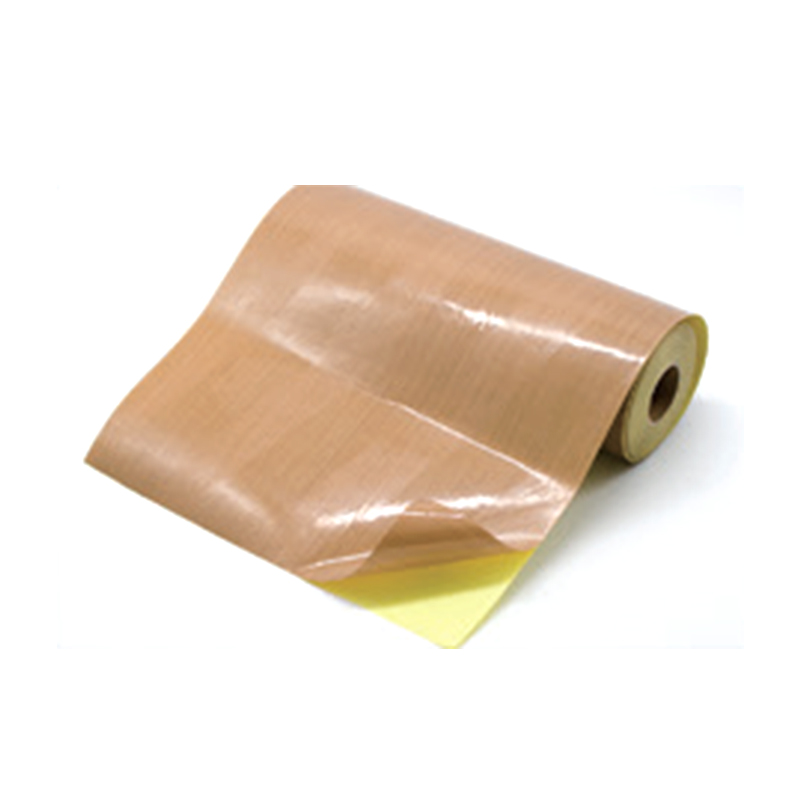
PTFE film tape for heat sealing, PTFE tape for packaging machines, and PTFE film tape for electronic components each impose distinct demands on the tape's construction. A packaging machine with a continuously heated sealing jaw needs a tape that releases cleanly from molten polyethylene film at 180–220°C, cycle after cycle, without adhesive ooze or backing degradation. Here, a thick PTFE film—typically 0.13–0.18 mm—with a high-temperature silicone adhesive is the industry standard. The film thickness resists the mechanical wiping action of the product being sealed, while the silicone adhesive maintains its bond strength at sustained heat. In contrast, an electronic component application such as coil winding or flexible circuit masking may prioritize thinness and dielectric strength over abrasion resistance. For these, a 0.05–0.08 mm film with an acrylic adhesive is often preferred, because acrylic adhesives are generally silicone-free—a requirement in many electronics clean rooms—and the thin film conforms tightly around small-radius corners without lifting.
Understand PTFE Film Tape Thickness Selection
PTFE film tape thickness selection involves a trade-off between conformability, tensile strength, and wear resistance. Thinner tapes conform better to irregular surfaces and transfer less heat when used as a release liner, but they are more susceptible to tearing under mechanical stress. Thicker films provide longer wear life and greater puncture resistance but may require a higher unwind force and are less compliant on curved profiles.
| Thickness (Film Only) | Typical Applications | Tensile Strength (approx.) |
|---|---|---|
| 0.05–0.08 mm | Electrical insulation, coil wraps, light-duty release | 25–40 N/cm |
| 0.10–0.13 mm | General-purpose heat sealing, packaging machine bars | 50–70 N/cm |
| 0.18–0.25 mm | Heavy-duty sealing jaws, abrasive conveyor surfaces, chemical tank lining | 80–120 N/cm |
A rule of thumb: if the tape is expected to survive more than 50,000 cycles on a packaging machine, select a film thickness of at least 0.13 mm. For one-time-use masking or clean release where the tape is replaced frequently, 0.08 mm is sufficient and more economical. Also note that the total tape thickness includes the adhesive layer, which typically adds 0.03–0.05 mm. When the tape must fit into a tight mechanical gap, specify the total thickness, not just the film caliper.
Silicone Adhesive vs. Acrylic Adhesive PTFE Tape: A Direct Comparison
The choice between silicone adhesive vs acrylic adhesive PTFE tape is arguably the most consequential selection factor, because the adhesive determines the temperature ceiling, chemical resistance, and whether the tape can be used in silicone-sensitive environments. Silicone adhesives dominate high-temperature applications due to their exceptional thermal stability. A peroxide-cured silicone adhesive can operate continuously at 260°C and withstand short excursions to 300°C, far exceeding the capability of standard acrylics, which typically degrade above 150–180°C. Silicone adhesives also exhibit excellent low-surface-energy adhesion, meaning they bond well to the PTFE backing itself and to other difficult substrates like silicone-treated surfaces.
However, silicone adhesives can leave a residue that interferes with painting, coating, or subsequent bonding operations. In electronics manufacturing, airborne silicone contamination can cause connector failures, which is why many clean-room specifications explicitly forbid silicone-containing products. This is where acrylic adhesives come into their own. An acrylic adhesive PTFE tape provides a silicone-free alternative with good adhesion to metals and plastics, a service temperature range up to approximately 150°C, and lower outgassing. Acrylic adhesives also tend to have higher initial tack and better shear strength at room temperature than silicones, making them preferable for applications where the tape is applied to a vertical surface or must resist slippage before heat is applied.
| Property | Silicone Adhesive | Acrylic Adhesive |
|---|---|---|
| Continuous Temperature Rating | 260°C | 150°C |
| Adhesion to Low-Energy Surfaces | Excellent | Good (requires higher surface energy) |
| Silicone Content | Yes | None |
| Residue Upon Removal | Possible at high temperatures over time | Generally clean |
| Best Suited For | Heat sealing, high-temp masking, release surfaces | Electronics, clean-room, lower-temperature hold-down |
Evaluate PTFE Tape Temperature Rating for Your Process
The PTFE tape temperature rating is defined by both the film and the adhesive, and the lower of the two limits the tape. PTFE film itself is thermally stable to approximately 260°C, above which it begins to soften and can release trace amounts of fluorinated compounds. The adhesive, however, is usually the weaker thermal link. A silicone adhesive PTFE tape rated for 260°C continuous service will perform reliably on a heat-sealing bar operating at 200°C, because the temperature at the adhesive interface is typically lower than the bar setpoint due to the temperature gradient across the film. Nevertheless, for a safety margin, select a tape whose rated continuous temperature exceeds the maximum expected operating temperature by at least 30°C.
Intermittent exposure ratings are also important. Many packaging machines cycle between heat and cool-down phases, and a tape that withstands 260°C continuously may briefly tolerate 300°C for a few seconds without adhesive failure. Verify the manufacturer's reported temperature data; a responsible supplier will specify both the continuous service temperature and the short-term peak temperature. For applications such as heat-gun masking or hot-over-plasma treatment, where the tape sees a momentary high heat flux, a high-temperature silicone adhesive is essential.
PTFE Tape Release Surface Selection: Skived vs. Extruded Film
PTFE tape release surface selection involves a subtle but important distinction between skived PTFE film and extruded or cast PTFE film. Skived film is produced by peeling a thin layer from a solid PTFE billet, which results in a naturally denser, more uniform surface with lower porosity. This makes skived PTFE tape the superior choice for release applications where any transfer of adhesive or coating to the tape surface would compromise the process. Extruded PTFE film can have microscopic pinholes and a slightly rougher surface, which may provide slightly better mechanical keying but a less perfect release.
For PTFE film tape for electronic components used as a release liner in flexible circuit lamination, a skived film with a smooth, non-porous surface is preferred to prevent resin bleed-through. For conveyor belt splicing or chute lining where release is secondary to wear resistance, an extruded film with a textured surface may offer acceptable performance at a lower cost. When ordering, if the application is release-critical, explicitly request skived PTFE tape and verify that the surface roughness (Ra) is below 0.5 µm.
Factors Affecting PTFE Tape Performance in Operation
Beyond the material specifications, several factors affecting PTFE tape performance manifest only after installation. Recognizing these operational variables during the selection stage prevents field failures that are often misattributed to a defective tape.
- Surface preparation: PTFE tape adhesives, particularly acrylics, require a clean, dry, and oil-free substrate. A surface contaminated with silicone spray, cutting oil, or even fingerprint residue can reduce peel adhesion by 30–50%. Wipe the substrate with isopropyl alcohol and allow it to dry before tape application.
- Application pressure and dwell time: Pressure-sensitive adhesives flow into the surface profile under pressure. Applying the tape with a roller or squeegee and allowing a dwell time of 15–30 minutes at room temperature before exposing it to heat improves the ultimate bond. On cold surfaces, warming the substrate to 30–40°C accelerates adhesive wet-out.
- Edge lifting due to thermal expansion mismatch: PTFE has a coefficient of thermal expansion of approximately 100–120 × 10⁻⁶ /°C, significantly higher than steel or aluminum. When a PTFE tape is bonded to a metal bar and heated, the differential expansion can cause the tape edges to lift. Using a thicker adhesive layer (e.g., 0.05 mm adhesive instead of 0.03 mm) provides a degree of compliance that absorbs this strain.
- Chemical exposure: PTFE is nearly universally chemical-resistant, but the adhesive is not. Acrylic adhesives soften in the presence of ketones, esters, and aromatic solvents. Silicone adhesives resist a broader range of chemicals but can swell in prolonged contact with certain hydrocarbon oils. Check the adhesive's chemical resistance chart against any cleaning agents or process fluids that may contact the tape edge.
- Storage conditions: PTFE tape should be stored in its original packaging at 10–25°C and 40–60% relative humidity. Excessive heat accelerates adhesive curing in the roll, reducing tack, while high humidity can condense on the adhesive surface and cause poor wet-out. A roll that has been stored improperly may look normal but fail prematurely in service.
Taking these operational factors into account transforms the tape selection from a simple purchase-order exercise into an engineered solution. By aligning the film thickness, adhesive chemistry, temperature rating, and release surface with the specific mechanical, thermal, and chemical demands of the process, a properly chosen PTFE film tape will deliver consistent, low-maintenance performance across its full intended service life.
Message Us Right Now!

- Phone: +86-18651171105
- Fax: +86-18651171105
- Email: yaxing@yaxing.com
- Address: No. 18, Yongxin East Road, Gaogang District, Taizhou City, Jiangsu Province, China.
Copyright © Yaxing Plastic Industry Co., Ltd. All Rights Reserved. Custom High-End Precision PTFE Series Products Manufacturers 