

 English
 Español
 русский
The Ultimate Guide to PTFE Open Mesh Conveyor Belts: Performance and Selection
In the demanding world of industrial conveying, selecting the right belt is critical for efficiency, safety, and product quality. Among the premium solutions available, the PTFE Open Mesh Conveyor Belt stands out for its unique combination of properties. This guide delves deep into the characteristics, applications, and selection criteria for these advanced belts, providing the detailed information engineers and procurement specialists need to make an informed decision.
Content
- 1 What is a PTFE Open Mesh Conveyor Belt?
- 2 Unmatched Advantages of PTFE Open Mesh Belts
- 3 Key Applications Across Industries
- 4 Selecting the Right PTFE Open Mesh Belt: A Detailed Comparison
- 5 Maximizing Belt Life and Performance
- 6 Why Choose Taizhou Yaxing Plastic Industry Co., Ltd for Your PTFE Belt Needs?
- 7
- 8 Frequently Asked Questions (FAQ)
- 8.1 1. What is the maximum temperature a PTFE open mesh belt can withstand?
- 8.2 2. How do I clean a PTFE conveyor belt without damaging it?
- 8.3 3. Can PTFE mesh belts be joined into an endless (seamless) loop?
- 8.4 4. What factors cause a PTFE belt to start sticking over time?
- 8.5 5. How does the open mesh design benefit a drying or cooling process?
- 9 References
What is a PTFE Open Mesh Conveyor Belt?
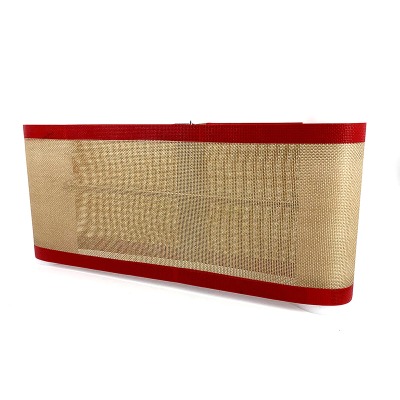
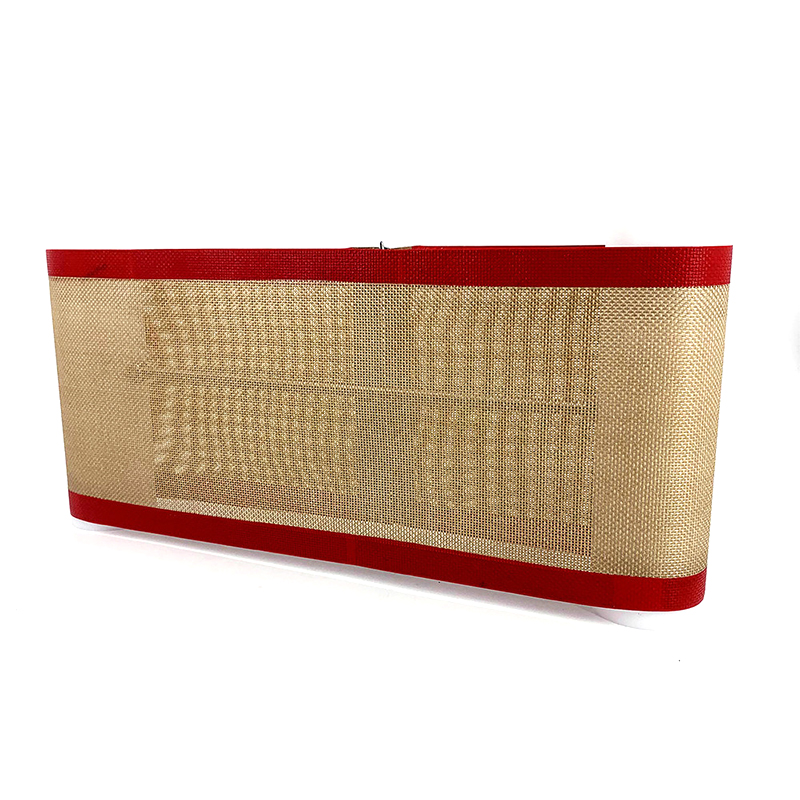
A PTFE Open Mesh Conveyor Belt is a specialized industrial belt constructed from fiberglass yarn coated or impregnated with Polytetrafluoroethylene (PTFE). This combination creates a robust, open-weave fabric that is then processed at high temperatures to sinter the PTFE, forming a seamless, non-stick, and heat-resistant belt. The open mesh design is a key feature, offering several functional advantages.
- Material Composition: PTFE-coated fiberglass.
- Structure: Woven mesh providing airflow and drainage.
- Key Properties: Non-stick, high-temperature resistance, chemical inertness, dimensional stability.
Unmatched Advantages of PTFE Open Mesh Belts
The superiority of PTFE open mesh belts stems from the inherent properties of PTFE, which is renowned for having one of the lowest coefficients of friction of any solid material [1].
Exceptional Non-Stick Surface
- Virtually no adhesive materials will permanently bond to the PTFE surface.
- Ensures easy release of sticky products like dough, candy, or uncured rubber.
- Minimizes downtime for cleaning, enhancing overall equipment effectiveness (OEE).
Extreme Temperature Resistance
- Operates continuously from cryogenic temperatures up to +260°C (+500°F) [2].
- Withstands short-term exposure to even higher temperatures.
- Ideal for processes involving baking, drying, freezing, or heat sealing.
Chemical and Corrosion Inertness
- Unaffected by almost all industrial chemicals, solvents, and acids.
- Resists moisture, oils, and fats, preventing belt degradation.
- Suitable for harsh washing environments and chemical processing.
Open Mesh Design Benefits
- Airflow: Allows hot or cold air to pass through, enabling uniform heating, drying, or cooling of products.
- Drainage: Permits liquids to drain away, crucial for washing, coating, or food processing lines.
- Lightweight & Flexible: Offers excellent tracking and requires less drive power compared to solid metal belts.
Key Applications Across Industries
The unique properties of PTFE open mesh belts make them indispensable in numerous sectors where conventional belts fail.
Food Processing Industry
- Baking: Conveying bread, cookies, and pastries through ovens without sticking.
- Freezing: Used in spiral freezers for quick freezing of vegetables, seafood, and prepared meals.
- Drying: For dehydrating fruits, meat jerky, and noodles.
- Coating & Batters: Allows excess batter to drip through the mesh.
Textile and Nonwovens
- Conveying fabrics through heat-setting, drying, and laminating ovens.
- Used in the production of technical textiles and geotextiles.
Industrial Product Manufacturing
- Printing & Packaging: Drying of inks and coatings on materials.
- Rubber & Plastics: Curing and cooling of extruded profiles and sheets.
- Electronics: Soldering and curing processes in PCB assembly.
Selecting the Right PTFE Open Mesh Belt: A Detailed Comparison
Not all PTFE mesh belts are created equal. Performance varies based on mesh density, yarn thickness, and coating quality. Understanding these differences is crucial for selecting a belt that offers long-term reliability and cost-effectiveness. For instance, a PTFE open mesh belt for high temperature food processing requires a different specification than one for PTFE coated fiberglass conveyor belt for drying applications.
Critical Selection Parameters
The following table compares key parameters to consider when specifying a belt. Choosing a heavy duty PTFE mesh conveyor belt for a demanding application versus a standard one can significantly impact maintenance cycles and total cost of ownership.
| Parameter | Standard Belt | High-Performance / Heavy-Duty Belt | Impact on Application |
|---|---|---|---|
| Mesh Count (Open Area) | Lower mesh count, larger openings. | Higher mesh count, smaller openings or varied weave patterns. | Affects airflow, drainage, and product support. Fine products may require a tighter weave. |
| Yarn Thickness & Weave | Standard thickness, basic weave. | Thicker yarns, balanced or reinforced weave for stability. | Determines tensile strength, edge stability, and resistance to edge wear and fraying. |
| PTFE Coating Quality & Thickness | Standard coating. | High-precision, uniform, and potentially multi-layer coating. | Directly influences non-stick performance, chemical resistance, and service life. A superior coating resists micro-cracking. |
| Temperature Rating | Standard range (e.g., -70°C to +260°C). | Wide range with excellent thermal stability. | Essential for processes with extreme thermal cycling or peak temperatures. |
For operations with significant lateral forces or tracking challenges, considering a belt designed as a PTFE conveyor belt with excellent tracking is advisable. Furthermore, industries like composite material production often seek a non stick conveyor belt for composite material curing due to the sticky nature of uncured resins.
Maximizing Belt Life and Performance
Proper installation and maintenance are key to realizing the full investment in a PTFE open mesh belt.
Installation Best Practices
- Ensure the conveyor frame is level, square, and aligned.
- Use appropriate tensioning (not over-tightened).
- Align tracking guides and sensors correctly.
Operational Care and Cleaning
- Use soft brushes or recommended cleaning solutions to preserve the PTFE surface.
- Avoid sharp tools or abrasive cleaners that can damage the coating.
- For persistent residues, consult the manufacturer for approved cleaning methods.
Troubleshooting Common Issues
- Belt Tracking Problems: Often caused by improper tension, misaligned rollers, or a damaged belt edge.
- Premature Wear: Can result from abrasive products, excessive heat beyond rating, or chemical exposure outside specification.
Why Choose Taizhou Yaxing Plastic Industry Co., Ltd for Your PTFE Belt Needs?
With over two decades of specialization in fluoroplastic products, Taizhou Yaxing Plastic Industry Co., Ltd has established itself as an advanced manufacturing base for PTFE products in China. Our deep expertise is directly applied to the production of high-performance PTFE Open Mesh Conveyor Belts.
Commitment to Advanced Manufacturing
- Houses 16 advanced PTFE glass fiber cloth coating and drying lines.
- Utilizes imported German high-precision PTFE film cutting equipment and Dornier wide-width rapier looms for superior fabric consistency.
- Independent R&D focus has led to the development of ultra-high-precision PTFE films and grid conveyor belts, filling domestic gaps in several fields.
Quality and Proven Expertise
- ISO9001 Quality Management System certified, ensuring consistent product standards.
- Recipient of the National Technological Transformation Award and holder of National Utility Model Patents for its products.
- Products are exported globally, proving their reliability in diverse industrial environments across Europe, America, Asia, and Africa.
Our dedication ensures that every belt is engineered not just to meet specifications, but to deliver durable, reliable performance in the most challenging applications, from a simple PTFE coated fiberglass conveyor belt for drying applications to a complex heavy duty PTFE mesh conveyor belt for continuous 24/7 operation.
Frequently Asked Questions (FAQ)
1. What is the maximum temperature a PTFE open mesh belt can withstand?
High-quality PTFE open mesh belts, like those from experienced manufacturers, can operate continuously at temperatures up to 260°C (500°F) and withstand even higher short-term peaks without losing their structural or non-stick properties [2].
2. How do I clean a PTFE conveyor belt without damaging it?
Use warm water with a mild detergent and a soft-bristle brush or non-abrasive pad. For tougher residues, consult the manufacturer for approved solvents. Avoid sharp metal scrapers and harsh abrasive cleaners that can compromise the PTFE coating.
3. Can PTFE mesh belts be joined into an endless (seamless) loop?
Yes, a significant advantage is that they can be spliced and sintered into a truly seamless, endless belt. This eliminates the bump and wear associated with mechanical clamps or laces, providing a smoother conveying surface and better tracking.
4. What factors cause a PTFE belt to start sticking over time?
Sticking usually indicates degradation of the PTFE surface. Causes can include prolonged exposure to temperatures beyond the belt's rating, abrasive cleaning, chemical attack from highly corrosive agents like molten alkali metals, or simply the end of the belt's service life.
5. How does the open mesh design benefit a drying or cooling process?
The open mesh allows hot or cold air to pass directly through the belt and around the product, enabling much more efficient and uniform heat transfer compared to a solid belt where air can only flow over the top. This leads to faster process times and more consistent product quality.
References
[1] D. A. Banzhof, "The Properties and Applications of Polytetrafluoroethylene (PTFE)," inHandbook of Fluoropolymer Science and Technology, Wiley, 2014, pp. 45-67. (This reference supports the statement on PTFE's low coefficient of friction).
[2] "Standard Specification for Sintered Polytetrafluoroethylene (PTFE) Sheet," ASTM D4894-19, ASTM International, 2019. (This standard provides information on the temperature resistance properties of sintered PTFE materials).
Message Us Right Now!

- Phone: +86-18651171105
- Fax: +86-18651171105
- Email: yaxing@yaxing.com
- Address: No. 18, Yongxin East Road, Gaogang District, Taizhou City, Jiangsu Province, China.
Copyright © Yaxing Plastic Industry Co., Ltd. All Rights Reserved. Custom High-End Precision PTFE Series Products Manufacturers 