

 English
 Español
 русский
The Ultimate Guide to PTFE Open Mesh Conveyor Belts: Selection, Benefits, and Applications
In the demanding world of industrial automation and material handling, the efficiency of a production line often hinges on the reliability of its components. Among these, the conveyor belt is a critical workhorse. For applications involving extreme temperatures, sticky substances, or stringent hygiene requirements, the PTFE Open Mesh Conveyor Belt stands out as a superior solution. This guide delves deep into the specifics of PTFE open mesh belts, offering technical insights and practical advice to help you select the optimal belt for your operations.
Content
- 1 What is a PTFE Open Mesh Conveyor Belt?
- 2 Core Advantages and Industry Applications
- 3 How to Select the Right PTFE Open Mesh Belt: A Detailed Comparison
- 4 Addressing Specific Industry Challenges with Specialized Belts
- 5 Installation, Maintenance, and Troubleshooting
- 6 Why Expertise Matters: The Yaxing Advantage
- 7
- 8 Frequently Asked Questions (FAQs)
- 8.1 1. What is the maximum temperature a PTFE open mesh belt can withstand?
- 8.2 2. How do I clean a PTFE conveyor belt effectively?
- 8.3 3. Can PTFE mesh belts be made anti-static?
- 8.4 4. What factors most influence the lifespan of a PTFE mesh belt?
- 8.5 5. Are there different joining methods for PTFE open mesh belts?
What is a PTFE Open Mesh Conveyor Belt?
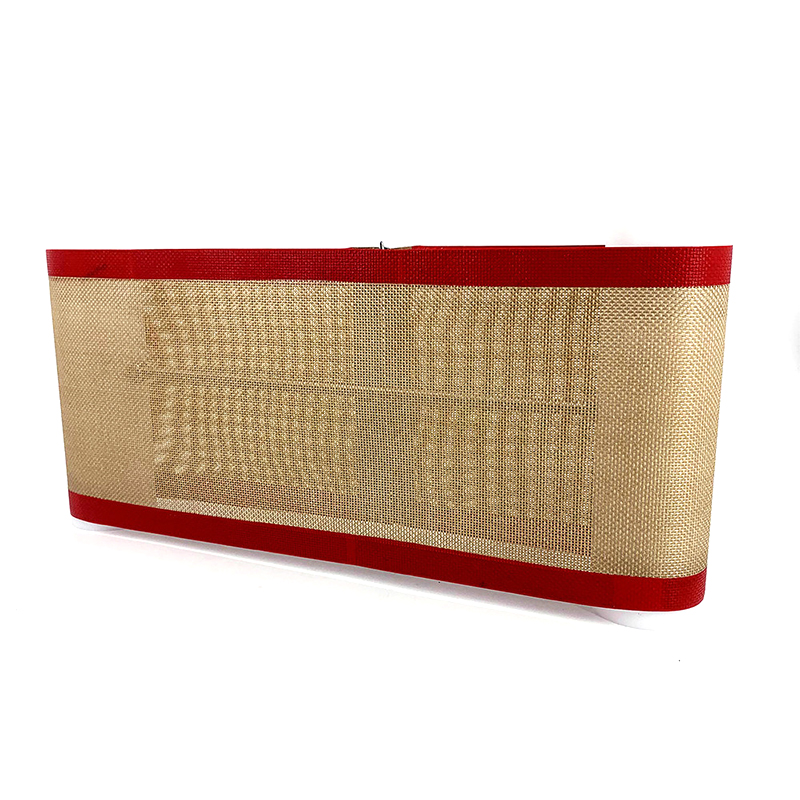
A PTFE Open Mesh Conveyor Belt is a high-performance belting system constructed from fiberglass yarns coated with Polytetrafluoroethylene (PTFE). The "open mesh" refers to its woven, grid-like structure, which allows for free air circulation, liquid drainage, and easy cleaning. The PTFE coating imbues the belt with exceptional non-stick, heat-resistant, and chemically inert properties, making it indispensable in numerous industries.
Core Advantages and Industry Applications
The unique combination of PTFE properties and an open weave design creates a belt with unparalleled benefits for specific manufacturing challenges.
Key Benefits of PTFE Coated Mesh Belts
- Exceptional Non-Stick Surface: PTFE is famously non-stick, ensuring even the most adhesive materials like dough, candy, or uncured rubber release cleanly without residue.
- Wide Temperature Range: These belts maintain integrity from cryogenic levels up to +260°C (+500°F) continuously, with higher peak tolerances.
- Chemical Inertness: Resistant to almost all industrial chemicals, solvents, and oils, preventing belt degradation.
- Open Mesh Design: Promotes airflow for cooling or drying processes and allows for easy cleaning and liquid passage.
- Dimensional Stability: The fiberglass core offers low stretch and high tensile strength, ensuring consistent tracking and minimal maintenance.
- Compliance & Safety: PTFE is FDA-compliant and suitable for direct food contact, meeting hygiene standards in food and pharmaceutical production.
Primary Industrial Applications
- Food Processing: Baking, drying, freezing, and cooling of snacks, pastry, meat, and seafood.
- Textile and Nonwoven: Heat-setting, bonding, and drying processes for fabrics.
- Plastics and Composites: Laminating, curing, and sintering in production lines.
- Printing & Packaging: UV curing, dye sublimation, and drying stages.
- Industrial Drying: Drying of screen-printed items, ceramics, or electronic components.
How to Select the Right PTFE Open Mesh Belt: A Detailed Comparison
Choosing the correct belt is not a one-size-fits-all decision. Key specifications must be matched to your process requirements. Here is a detailed comparison of critical selection factors, followed by a summary table.
Mesh Count and Open Area
The mesh count (strands per inch/cm) directly impacts the belt's open area and surface contact. A higher mesh count provides a smoother surface with less open area, ideal for small products. A lower mesh count offers greater airflow and drainage, suitable for drying or processes with liquid runoff.
Yarn Thickness and Tensile Strength
Thicker yarns increase belt strength and durability for heavy loads but may reduce flexibility. Thinner yarns offer finer mesh and better product contact for lightweight items.
PTFE Coating Thickness and Treatment
Standard coatings are sufficient for general non-stick use. However, processes involving sharp or abrasive materials require heavy-duty PTFE coated belts for abrasive materials. Enhanced coatings or filled PTFE compounds can dramatically improve wear resistance and belt life in these challenging environments.
Selection Factors Comparison Table
| Selection Factor | Low Mesh / High Open Area | High Mesh / Low Open Area |
| Ideal For | Drying, cooling, processes with liquids | Small item conveyance, minimal marking |
| Airflow | Excellent | Reduced |
| Surface Contact | Reduced | Maximum |
| Product Size | Larger items | Small, delicate items |
| Key Factor | Yarn Thickness & Coating | Yarn Thickness & Coating |
| Light Loads | Standard coating, medium yarn | Standard coating, fine yarn |
| Heavy/Abrasive Loads | Heavy-duty coating, thick yarn | Not typically recommended |
Addressing Specific Industry Challenges with Specialized Belts
Beyond standard specifications, certain applications demand highly specialized belt features to solve specific production problems.
High-Temperature Applications: Sintering and Curing
Processes like PTFE sintering or powder coating curing involve sustained extreme heat. Standard belts can degrade. For these scenarios, selecting belts designed for high-temperature PTFE sintering processes is crucial. These belts use specialized weaves and premium PTFE formulations to resist embrittlement and maintain strength, ensuring process stability and safety.
Food Industry Hygiene and Cleaning
In food processing, preventing cross-contamination and ensuring easy sanitation are paramount. The non-porous, non-stick nature of PTFE mesh belts naturally supports hygiene. For operations involving oils or sticky residues, belts featuring an easy-clean non-stick conveyor mesh design, often with a modified coating, allow for quick, effective wash-downs, reducing downtime and meeting stringent food safety protocols.
Precision in Textile and Nonwoven Processing
The textile industry requires belts that provide uniform heat distribution without marking delicate fabrics. A PTFE mesh belt for textile heat setting is engineered with a precise, consistent mesh pattern and a smooth coating to ensure flawless fabric finish and dimensional stability during thermal processes.
Installation, Maintenance, and Troubleshooting
Proper handling extends belt life and optimizes performance.
Installation Best Practices
- Alignment is Critical: Ensure all pulleys are perfectly aligned to prevent tracking issues and premature wear.
- Correct Tension: Apply only enough tension to prevent slippage under load. Over-tensioning stresses the fibers.
- Joining Methods: Use the recommended method (e.g., spiral connecting rods, clipper lacing) suitable for the belt type and application.
Routine Maintenance Tips
- Regularly clean the belt to prevent buildup using appropriate cleaners.
- Inspect for wear, fraying, or coating damage, especially at edges and joints.
- Check and maintain tracking guides and tensioners.
Common Issues and Solutions
One frequent challenge is troubleshooting PTFE belt tracking problems. This can stem from several causes. Below is a comparison of common symptoms and their typical solutions.
| Tracking Problem Symptom | Potential Cause | Recommended Solution |
| Belt drifts to one side consistently | Pulley misalignment, uneven tension, or buildup on one side | Re-align pulleys, check tension balance, clean belt and pulleys |
| Belt "snakes" or wanders | Incorrect tension (usually too loose), worn tracking guides | Increase tension slightly, replace or adjust tracking guides |
| Edge wear or fraying | Belt rubbing against frame, damaged edge seal | Adjust frame clearance, inspect and repair edge if possible |
Why Expertise Matters: The Yaxing Advantage
Selecting and implementing the right PTFE Open Mesh Conveyor Belt requires more than just a product catalog; it demands deep material science knowledge and application expertise. This is where the heritage and capability of a dedicated manufacturer like Taizhou Yaxing Plastic Industry Co., Ltd. become invaluable.
With a focus on the fluoroplastic industry for over two decades, Yaxing has evolved from its foundation as Taixing Special Plastic Equipment Factory into an advanced manufacturing base. Operating from the strategic Yangtze River Development Zone, the company leverages ISO9001-certified processes and advanced equipment, including German high-precision film cutting systems and rapier looms.
Yaxing’s dedication to independent R&D has led to breakthroughs like ultra-high-precision PTFE films and, critically for this discussion, high-performance PTFE grid conveyor belts. This specialization means they understand the nuanced requirements for applications ranging from high-temperature PTFE sintering processes to creating an easy-clean non-stick conveyor mesh for the food sector. Their expertise is particularly evident in solving niche challenges, such as formulating heavy-duty PTFE coated belts for abrasive materials or engineering a precise PTFE mesh belt for textile heat setting.
For engineers facing persistent troubleshooting PTFE belt tracking problems, partnering with an expert manufacturer provides access to tailored solutions, technical support, and belts built for longevity and performance, filling gaps in domestic and international markets with award-winning, patented technology.
Frequently Asked Questions (FAQs)
1. What is the maximum temperature a PTFE open mesh belt can withstand?
Standard PTFE open mesh belts can operate continuously at temperatures up to 260°C (500°F), with short-term peaks up to 300°C (572°F). For sustained higher temperatures, specially formulated belts for processes like sintering should be selected.
2. How do I clean a PTFE conveyor belt effectively?
Due to its non-stick properties, most debris can be removed with a soft brush or cloth. For tougher residues, use warm water with a mild detergent. Avoid abrasive pads or harsh chemical solvents that could damage the PTFE coating.
3. Can PTFE mesh belts be made anti-static?
Yes, a common modification is to incorporate carbon or other conductive materials into the PTFE coating or fiberglass yarns to create a static-dissipative belt, which is essential in electronics manufacturing or environments with explosion risks.
4. What factors most influence the lifespan of a PTFE mesh belt?
Key factors include the severity of the application (abrasion, temperature, chemicals), the quality of the belt construction and coating, correct installation and tension, and adherence to proper maintenance and cleaning routines.
5. Are there different joining methods for PTFE open mesh belts?
Yes, common methods include spiral connecting rods (for a smooth, endless join), clipper lacing with stainless steel pins (for easy installation/removal), and butt-welding of coated fabrics. The best method depends on belt thickness, application, and required joint strength.
Message Us Right Now!

- Phone: +86-18651171105
- Fax: +86-18651171105
- Email: yaxing@yaxing.com
- Address: No. 18, Yongxin East Road, Gaogang District, Taizhou City, Jiangsu Province, China.
Copyright © Yaxing Plastic Industry Co., Ltd. All Rights Reserved. Custom High-End Precision PTFE Series Products Manufacturers 