

 English
 Español
 русский
Barbecue Grill Mat: Materials, Safe Temperatures & How to Use One
Content
- 1 What Is a Barbecue Grill Mat and What Can It Actually Do?
- 2 Materials: PTFE, Fiberglass, and What the Temperature Ratings Mean
- 3 What a Grill Mat Is Good For — and Where It Falls Short
- 4 How to Use, Clean, and Store a Barbecue Grill Mat
- 5 Buying a Barbecue Grill Mat: What the Specifications Actually Mean
What Is a Barbecue Grill Mat and What Can It Actually Do?
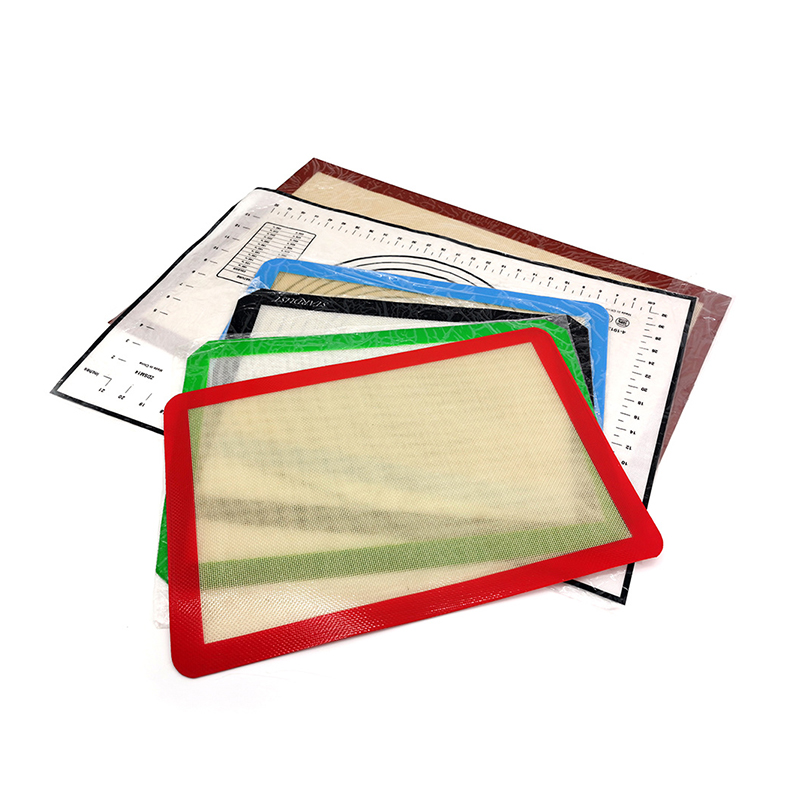
A barbecue grill mat is a flat, heat-resistant sheet placed directly on grill grates to create a non-stick cooking surface that still allows fat to drain and smoke to circulate. The mat sits between the food and the grates, preventing small items from falling through, stopping food from sticking, and making cleanup significantly faster — all without meaningfully affecting grill marks, cook time, or smoke flavor when used correctly.
Grill mats are reusable, flexible, and thin enough — typically 0.2 mm to 0.4 mm — that they do not act as a heat barrier the way a baking sheet or cast iron pan would. They are distinct from deck protection mats (placed under the grill to protect decking) and from grill grate covers (solid plates for indirect cooking). Understanding the difference matters because all three are sold under overlapping search terms, and choosing the wrong type produces predictably disappointing results.
Materials: PTFE, Fiberglass, and What the Temperature Ratings Mean
The overwhelming majority of barbecue grill mats on the market are constructed from PTFE-coated fiberglass fabric. PTFE (polytetrafluoroethylene) is the same base polymer used in non-stick cookware coatings, and fiberglass provides the dimensional stability and tensile strength needed to handle repeated flexing, rolling, and high-heat exposure without tearing or deforming.
Safe Operating Temperature Range
PTFE-fiberglass grill mats carry a maximum continuous use temperature of 260°C (500°F) in most product specifications, with some heavier-weight mats rated to 288°C (550°F). These limits are meaningful, not conservative marketing: above approximately 260°C, PTFE begins to off-gas decomposition products at detectable levels, and above 315°C (600°F), degradation accelerates significantly. At normal grilling temperatures for most foods — chicken at around 175–200°C surface temperature, burgers and steaks at 200–230°C — a quality grill mat operates well within its rated range.
The risk zone is direct high-heat grilling over charcoal or gas burners set to maximum, where grate surface temperatures can reach 370°C (700°F) or above. At those temperatures, a grill mat should not be used. The mat's temperature limit is determined by the grate surface temperature beneath it, not the air temperature inside the grill lid — a distinction that many users miss when they assume their grill is within range because the hood thermometer reads 250°C while the grate itself is significantly hotter.
PFOA-Free Designation
PFOA (perfluorooctanoic acid) is a processing chemical historically used in PTFE manufacturing that has been linked to health and environmental concerns. Reputable grill mat manufacturers have used PFOA-free production processes since the mid-2010s following EPA regulatory action in the United States and equivalent measures in the EU. A PFOA-free label on a grill mat indicates the manufacturing process, not the coating itself — the PTFE coating in a PFOA-free mat is chemically identical to older products; it was simply made without PFOA as a processing aid. Grill mats carrying FDA food-contact compliance markings and EU food contact material certifications provide the clearest assurance of safe use within rated temperature limits.
Thickness and Weight Grades
Grill mat thickness correlates directly with durability and the number of use cycles before the PTFE coating begins to thin at flex points:
- 0.2 mm (light grade) — typically rated for 30–50 uses; adequate for occasional grilling but shows coating wear at fold lines within a single season of regular use.
- 0.25–0.3 mm (standard grade) — the most common consumer category; rated for 50–100 uses under normal conditions. This weight handles rolling and machine washing without delamination for most of its service life.
- 0.35–0.4 mm (heavy grade) — designed for frequent use or commercial applications; rated for 100+ cycles. Heavier mats hold their flat shape better on grates and resist curling at high temperatures.
What a Grill Mat Is Good For — and Where It Falls Short
A barbecue grill mat performs best in specific use cases and is genuinely the wrong tool for others. Matching the mat to the application produces consistently good results; mismatching it produces frustration and leads users to conclude the product doesn't work.
Where Grill Mats Excel
- Vegetables and small items — asparagus, sliced peppers, mushrooms, shrimp, and similar items that would fall through standard grill grates cook perfectly on a mat and are far easier to flip and retrieve. This is the application where grill mats deliver the most unambiguous value.
- Fish fillets — delicate fish that sticks aggressively to steel grates and breaks apart on flipping is one of the most common motivations for purchasing a grill mat. The non-stick surface and firm backing make it significantly easier to cook fish over a grill without it disintegrating.
- Marinated foods with heavy sauces — barbecue-sauced chicken pieces, teriyaki skewers, and similar items drip sugary marinade that burns onto bare grates. A mat contains the drips, prevents caramelized buildup on the grates, and makes cleanup a wipe rather than a scrub.
- Breakfast on the grill — eggs, bacon, and pancakes can be cooked on a grill mat over medium heat, turning the grill into a large outdoor griddle surface without requiring a separate cast iron insert.
Where Grill Mats Are the Wrong Choice
- High-heat searing — a thick ribeye or burger requiring a hard sear at maximum burner output should not be cooked on a mat. The required grate temperatures exceed the mat's safe operating range. Cook directly on clean, oiled grates for high-heat searing.
- Deep grill marks as a presentation goal — a grill mat produces a uniformly browned contact surface rather than the parallel char lines of direct grate contact. For presentation-focused grilling where grill marks are part of the dish, cook directly on grates.
- Charcoal grilling at full temperature — a freshly lit charcoal bed at peak heat produces grate temperatures well above any grill mat's rating. Wait until the charcoal has ashed over and the temperature has stabilized before placing a mat on the grates.
How to Use, Clean, and Store a Barbecue Grill Mat
First Use and Preheating
Wash a new grill mat with warm soapy water before the first use to remove any residue from manufacturing and packaging. Dry thoroughly before placing on the grill. Preheat the grill to the desired cooking temperature — medium to medium-high for most mat-appropriate foods — then place the mat on the grates and allow it to warm for 2–3 minutes before adding food. There is no need to oil the mat for most foods; the PTFE surface is inherently non-stick. For particularly lean proteins, a light spray of cooking oil on the mat before adding food eliminates any residual sticking risk.
Cleaning After Use
Most grill mats can be cleaned in three ways, in order of convenience:
- Wipe clean while warm — after food is removed, wipe the mat surface with a damp cloth or paper towel. The PTFE surface releases most residue without scrubbing when still warm.
- Wash by hand — mild dish soap and warm water with a soft sponge removes all grease and residue. Avoid abrasive scrubbers, steel wool, and harsh degreasers, which abrade the PTFE coating and shorten the mat's service life.
- Dishwasher — most standard and heavy-grade mats are dishwasher-safe on the top rack. Light-grade mats may show accelerated coating wear with repeated dishwasher cycles due to the higher water temperature and detergent strength.
Discard a grill mat when the PTFE coating shows visible peeling, flaking, or bubbling. Surface discoloration — a brownish tint from accumulated heat exposure — is normal and does not affect performance or safety, but coating delamination means the mat has reached the end of its service life.
Storage
Store grill mats rolled rather than folded to avoid permanent crease lines that cause the mat to lift off the grates during cooking. Most mats are sold with a storage tube or can be rolled and secured with a rubber band. Flat storage between two rigid surfaces is also acceptable for thicker mats that hold their shape without rolling.
Buying a Barbecue Grill Mat: What the Specifications Actually Mean
The grill mat market has a wide quality range compressed into a narrow price band, which makes specification comparison more important than price comparison. The following table summarizes the key specification fields and what to look for in each:
| Specification | What to Look For | Red Flags |
|---|---|---|
| Temperature rating | 260°C (500°F) minimum; 288°C (550°F) for heavy use | Ratings above 300°C without specifying PTFE grade — likely inaccurate |
| PFOA status | Explicitly PFOA-free; FDA food contact or EU food contact compliant | No food contact certification stated |
| Thickness | 0.25 mm or above for regular use; 0.35 mm+ for frequent grilling | Thickness not stated; described only as "ultra-thin" |
| Size | Verify fits your grill grate dimensions; most standard mats are 40 × 33 cm or 40 × 50 cm | Sizes described only in inches without cm equivalents (import listing inconsistency) |
| Stated use cycles | 50–100 for standard; 100+ for heavy grade | Claims of "unlimited uses" or "lifetime" without qualification |
Sets of two or three mats represent better value than single-mat purchases for most users, both because the per-mat price is lower and because rotating between mats extends the life of each individual mat by allowing full cooling and cleaning between uses. For households that grill two or three times per week through a full outdoor season, a set of two heavy-grade mats typically outlasts three or four seasons without needing replacement.

Message Us Right Now!

- Phone: +86-18651171105
- Fax: +86-18651171105
- Email: yaxing@yaxing.com
- Address: No. 18, Yongxin East Road, Gaogang District, Taizhou City, Jiangsu Province, China.
Copyright © Yaxing Plastic Industry Co., Ltd. All Rights Reserved. Custom High-End Precision PTFE Series Products Manufacturers 