

 English
 Español
 русский
How Is PTFE Film Manufactured? The Full Production Process Explained Clearly
If you are trying to understand how PTFE film is manufactured, the answer starts with a polymer that cannot be melted and extruded like ordinary thermoplastics. The entire production chain is built around two fundamentally different processes: making the PTFE resin, then converting that resin into a thin, uniform film. This article follows each step as it happens inside a professional PTFE film factory.
Content
- 1 The Chemistry Behind PTFE Film Manufacturing: From Chloroform to Resin
- 2 PTFE Film Manufacturing Step 1: Compression Molding and Sintering
- 3 PTFE Film Manufacturing Step 2: Skiving the Sintered Billet
- 4 PTFE Film Manufacturing Step 3: Etching and Surface Treatment
- 5 Quality Control in PTFE Film Manufacturing
- 6 FEP Film and the Casting Alternative: What Buyers Need to Know
- 7 FAQ: PTFE Film Manufacturing Questions
The Chemistry Behind PTFE Film Manufacturing: From Chloroform to Resin
PTFE film production starts with the synthesis of tetrafluoroethylene (TFE), not with a film extrusion line.
The route begins with chloroform and hydrogen fluoride, which is produced by treating fluorspar with sulfuric acid. Chloroform reacts with hydrogen fluoride to make chlorodifluoromethane (HCFC-22). When HCFC-22 is heated above 600 degrees C, it cracks into TFE, the monomer that later forms polytetrafluoroethylene.
The polymerization step is a radical process carried out under high pressure in stainless steel reactors. Suspension polymerization produces granular resin, which is the feedstock for skiving. Dispersion polymerization produces fine powder or aqueous dispersion, which is the feedstock for PTFE coated fabrics, tape, and impregnated mesh.
Key definition: Skived PTFE film is made from a solid, sintered cylinder that is shaved with a sharp blade into a continuous sheet. It is a subtractive process, not a melt-based one.
PTFE Film Manufacturing Step 1: Compression Molding and Sintering
Before a single sheet of PTFE film can be skived, the resin must be compacted into a solid cylinder and sintered.
Granular PTFE resin is weighed, poured into a cylindrical mold, and pressed at 50 to 100 MPa. The resulting preform is then loaded into a sintering furnace and heated to 370 to 380 degrees C. At that temperature, the resin particles fuse into a dense, homogeneous block.
The cooling rate matters more than most buyers expect. If a large billet cools too quickly, internal stresses create microcracks that appear as surface defects in the finished film. A billet with a diameter of 100 to 250 mm typically needs 24 to 48 hours to cool safely.
Billet diameter also limits film width. A 300 mm billet can produce film strips around 250 mm wide after edge trimming. This is why some suppliers can offer wide width PTFE film and others cannot.
PTFE Film Manufacturing Step 2: Skiving the Sintered Billet
Skiving is the dominant method for producing PTFE film because PTFE cannot be extruded into a thin film by conventional melt extrusion.
A precision lathe holds the sintered billet while a sharp blade moves along its surface. The blade angle, feed rate, and spindle speed control final film thickness and surface roughness. In a well set up machine, the blade is usually set between 15 and 25 degrees. A sharp angle can leave scratches, while a blunt angle creates chatter marks.
Typical skived film thicknesses range from 0.02 mm to 0.50 mm. Factories with CNC controlled equipment can hold thickness tolerance at +/-0.01 mm. This is the level of precision needed for gaskets, chemical line liners, and tape backing.
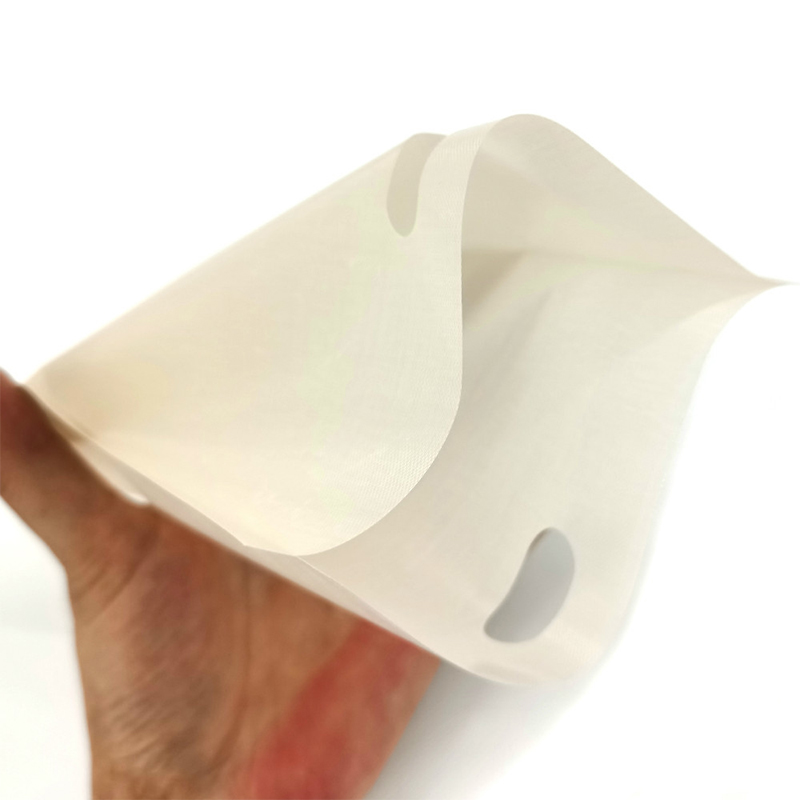 Skived PTFE Film for Precision ApplicationsThis skived PTFE film offers tight thickness tolerances and a smooth surface, making it suitable for gaskets, liners, and tape backing. Its electrical insulation and chemical resistance expand its use in electronics and medical devices.View Product →
Typical film thickness ranges by manufacturing method
PTFE Film Manufacturing Step 3: Etching and Surface Treatment
Untreated PTFE film has a surface energy of about 18 to 20 dynes/cm, which makes it impossible to bond with standard adhesives.
To improve adhesion, manufacturers apply a sodium naphthalene etching treatment. The film turns dark brown or black, and the process creates a micro rough surface with polar groups. Surface energy rises above 50 dynes/cm, allowing acrylic and silicone adhesives to anchor firmly.
Etching depth must be balanced. Excessive etching weakens the film, while insufficient etching causes poor bond strength. Most etched film is produced in rolls, then slit to width. Because the etching agent is reactive, large scale etching requires controlled waste treatment, which adds another layer of supplier qualification when you audit a factory.
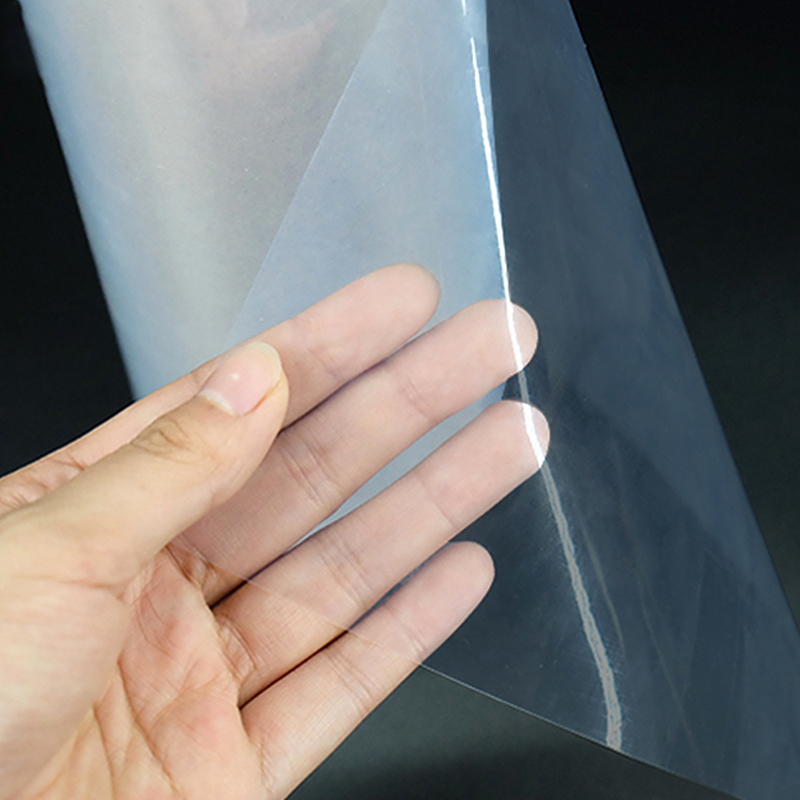 Etched PTFE Film for Strong BondingSurface-treated with sodium naphthalene, this etched PTFE film improves adhesion to metals and rubbers. It is essential for high-temperature tapes and composites where reliable bonding is critical.View Product →
Quality Control in PTFE Film Manufacturing
PTFE film reliability is defined by measurable parameters: density, thickness tolerance, tensile strength, and dielectric strength.
An ISO 9001 certified plant tests every batch for density, which should fall between 2.13 and 2.19 g/cm3. Tensile strength for virgin PTFE film ranges from 20 to 35 MPa depending on orientation. Dielectric strength, for a 0.1 mm film, is usually above 60 kV/mm.
| Property | Standard value |
| Density (g/cm3) | 2.13-2.19 |
| Thickness tolerance (mm) | +/-0.01 |
| Tensile strength (MPa) | 20-35 |
| Dielectric strength (kV/mm, 0.1 mm film) | Above 60 |
| Surface energy, untreated (dynes/cm) | 18-20 |
| Surface energy, etched (dynes/cm) | Above 50 |
FEP Film and the Casting Alternative: What Buyers Need to Know
FEP film is not skived; it is melt extruded or cast because FEP is a melt processable fluoropolymer.
FEP film is transparent, has high light transmittance, and is the standard release layer for 3D printers that use UV resin. A 100 micron FEP release film is the most common thickness in the 3D printing market. Light transmittance is typically above 95%, and it directly affects printing accuracy because the UV light must pass through the film without scattering.
One common purchasing question: Can FEP film replace PTFE film in every application? The answer is no. PTFE gives better chemical resistance and a wider continuous temperature range, while FEP offers optical clarity and easier heat sealing. For certain applications, this technical comparison of PTFE vs FEP will help you decide which material fits your product line.
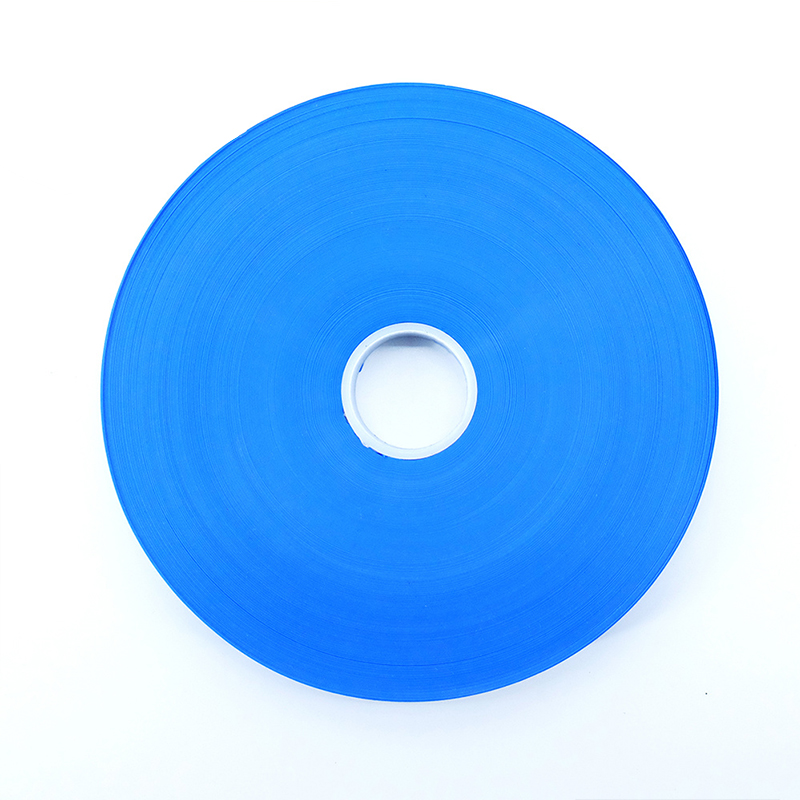 100μm FEP Film for 3D PrintingWith 96% light transmittance and high tensile strength, this FEP film ensures efficient resin curing in LCD/DLP printers. It non-stick surface aids easy release and supports high print quality.View Product →
Skived PTFE film
Best for chemical resistance, continuous service from -200 to 260 degrees C, and durability under harsh conditions.
FEP film
Best for optical clarity, heat sealability, and UV transmission in 3D printing and electronics.
FAQ: PTFE Film Manufacturing Questions
What is the most common method to manufacture PTFE film?
Skiving is the most common and cost effective method. It uses a precision lathe to peel a thin, continuous film from a sintered PTFE cylinder. Calendering a PTFE dispersion is an alternative, but it is less common for virgin film.
Can PTFE film be made by extrusion?
Standard PTFE cannot be melt extruded because it does not melt below its decomposition temperature. FEP and PFA are melt processable, so their films can be extruded, but PTFE film is produced by skiving or by dispersion calendering.
Why does etched PTFE film turn dark brown?
The dark brown color comes from the sodium naphthalene etching treatment. The reaction removes fluorine atoms on the surface and introduces oxygen-containing groups, which improves adhesive wettability without affecting the bulk properties of the PTFE.
What thickness tolerance can be expected for skived PTFE film?
With CNC controlled skiving equipment, +/-0.01 mm is achievable for film gauges under 0.5 mm. Always ask for the inspection report, not the supplier claim.
Understanding how PTFE film is manufactured is the first step in selecting a reliable supplier. Ask about the resin grade, the sintering profile, the skiving equipment, and whether etching is done in house. Those details make the difference between consistent film and batch to batch variation.
Message Us Right Now!

- Phone: +86-18651171105
- Fax: +86-18651171105
- Email: yaxing@yaxing.com
- Address: No. 18, Yongxin East Road, Gaogang District, Taizhou City, Jiangsu Province, China.
Copyright © Yaxing Plastic Industry Co., Ltd. All Rights Reserved. Custom High-End Precision PTFE Series Products Manufacturers 