

 English
 Español
 русский
Why PTFE Pressure Sensitive Tape Is Preferred for Non-Stick Surfaces | Yaxing
A packaging engineer runs a heat-sealing bar at 180°C for eight-hour shifts. By the third day, the polymer film residue has baked into a brown crust that flakes into the product and forces a line shutdown for scraping. The fix that engineers reach for is PTFE pressure sensitive tape, a self-adhesive release material that wraps around the bar and stops the adhesion at the source. The reason is molecular: PTFE has a surface energy of roughly 18 mN/m, forty-six times lower than steel and fourteen times lower than glass, so sticky films simply cannot bridge that gap.
Content
- 1 Why PTFE Pressure Sensitive Tape Wins on Release Performance
- 2 How PTFE Pressure Sensitive Tape Builds a True Release Surface
- 3 Temperature Tolerance: The Main Purchase Criterion
- 4 Selecting the Right PTFE Pressure Sensitive Tape for Your Process
- 5 Common Installations Where the Tape Earns Its Place
- 6 FAQ
Why PTFE Pressure Sensitive Tape Wins on Release Performance
PTFE pressure sensitive tape is preferred for non-stick surfaces because it combines the lowest surface energy of any solid engineering material with a pressure sensitive adhesive backing, letting it attach to metal, glass, or plastic without heat or solvent while creating a release face that rejects sticky materials. On a high-energy surface like stainless steel at 840 mN/m, a polymer film wets out and forms a strong bond. On PTFE at 18 mN/m, the same film contracts, beads, or releases under minimal peeling force. This is not a temporary coating effect. The PTFE layer is the bulk material of the tape face, so the non-stick property remains even after thousands of contact cycles.
| Property | PTFE pressure sensitive tape | Parchment paper | Silicone release liner |
| Surface energy | 18 mN/m | ~28 mN/m | ~24 mN/m |
| Continuous temperature | 260°C | 220°C | 200°C |
| Release residue | None | Trace | Minimal |
| Reusability | 100+ cycles | 1 use | 5-10 cycles |
How PTFE Pressure Sensitive Tape Builds a True Release Surface
PTFE pressure sensitive tape is not a single layer of PTFE film with glue on the back. It is a two-layer construction: a pressure sensitive adhesive carrier and a PTFE release face. The adhesive bonds to the metal jaw under hand pressure. The PTFE side is the working surface that touches the sticky material. This structure is what separates the tape from a plain PTFE film, which would need clips, magnets, or separate fastening.
PTFE pressure sensitive tape
- Adhesive backing, ready to apply
- Release face is PTFE, not a coating
- Functions from -60°C to 260°C
- Reusable over 100 cycles
Parchment or wax paper
- Needs clips or magnets to hold
- Can burn and leave carbon residue
- Single use only
- No stable performance above 220°C
The practical result is a field replacement in minutes. The tape peels off clean, leaves no residue on the seal bar, and the next strip goes on flat without trimming. This is why maintenance teams stock it as a standard consumable rather than a specialty item.
Temperature Tolerance: The Main Purchase Criterion
Temperature is the first parameter that decides whether PTFE pressure sensitive tape is the right choice. A tape with acrylic adhesive carries a continuous service limit of about 130°C. A tape with silicone adhesive holds its bond at 260°C, which is why it is the standard for heat-sealing jaws, oven liners, and lamination rolls.
If you run a sealing jaw at 180°C, an acrylic tape will start to slip at the edges within days. A silicone tape keeps its bond after weeks of continuous cycling. Short-term peaks above the continuous rating are possible in most tape constructions, but selection should always be based on the maximum sustained temperature of the process.
Selecting the Right PTFE Pressure Sensitive Tape for Your Process
The choice between acrylic and silicone adhesive depends on three variables: operating temperature, contact pressure, and how often the tape is replaced. The modification technology of PTFE pressure sensitive adhesive tape explains why the adhesive formulation changes the tape's behavior under heat.
Acrylic adhesive for light duty
Acrylic adhesive offers the highest initial tack at room temperature. It is recommended for packaging lines where the sealing bar stays under 130°C, for food processing equipment that runs intermittent cycles, and for general lamination rollers. The cost is roughly 30 to 40 percent lower than silicone adhesive tape.
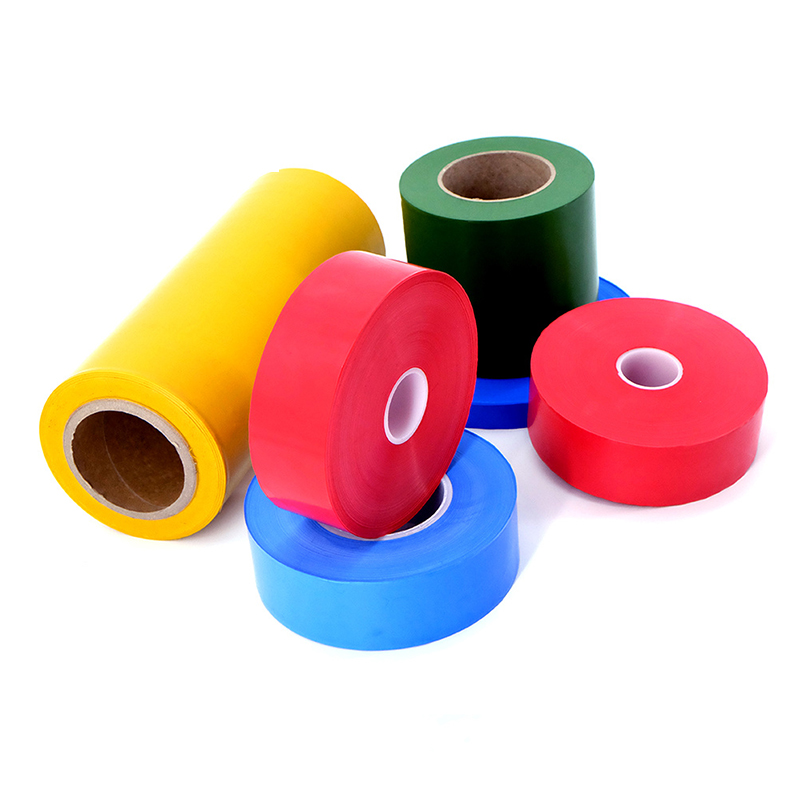
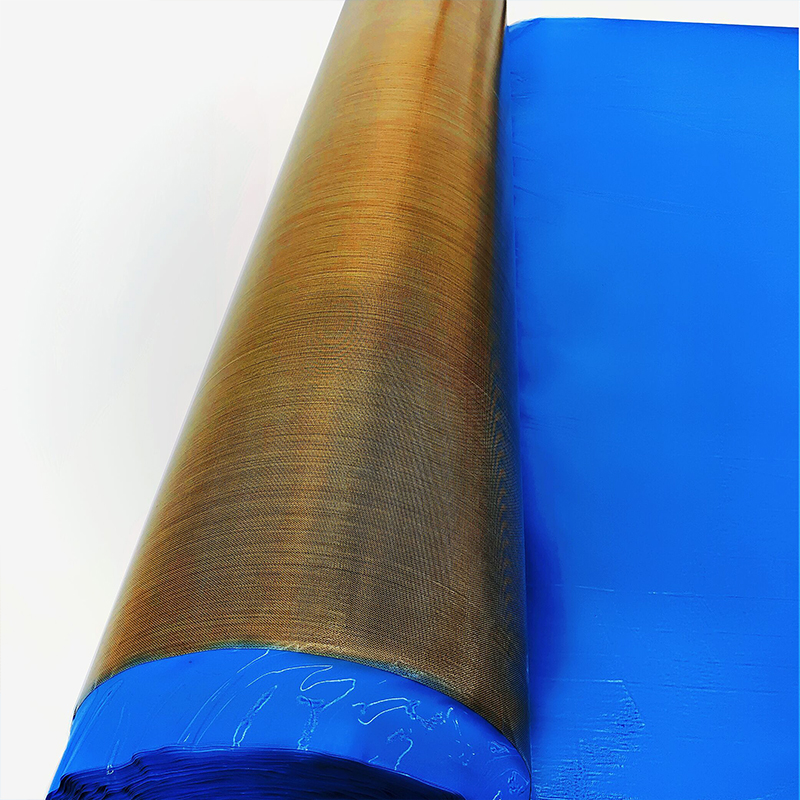 PTFE Tape with Acrylic Adhesive for Heat Sealing and PackagingThis tape offers a cost-effective release surface for heat sealing and packaging machines, with a service temperature range of -40°C to 170°C. It suits intermittent cycles and general lamination rollers.View Product →
Silicone adhesive for high duty
Silicone adhesive does not oxidize at elevated temperatures, so the peel strength stays consistent even after prolonged exposure at 200°C. This is the tape to choose for continuous-run packaging machinery, hot-melt applicators, and oven liners.
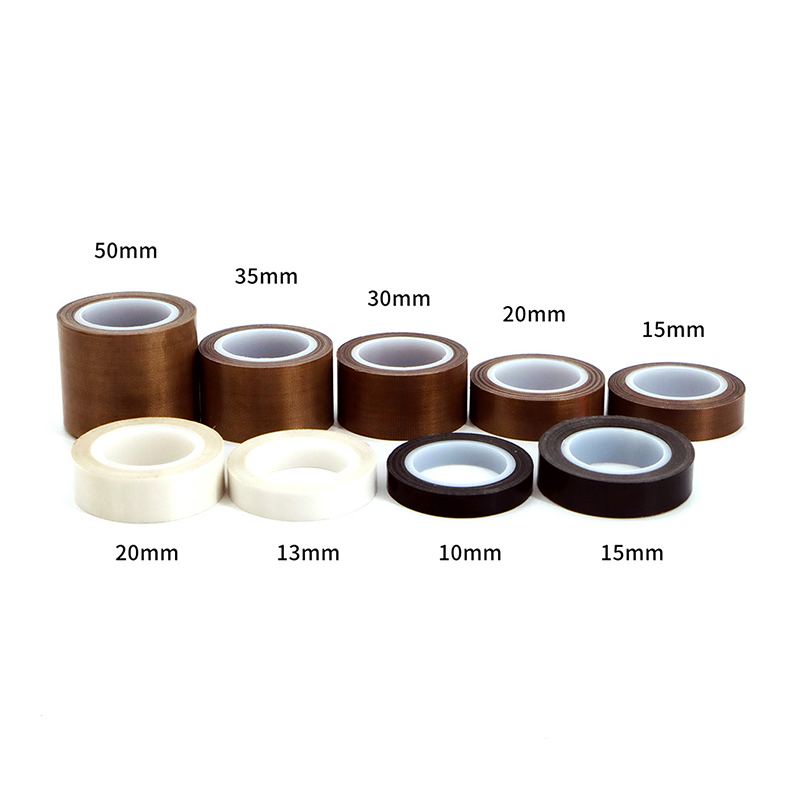 PTFE Tape with Silicone Adhesive for High-Temperature ApplicationsSilicone adhesive tape withstands continuous temperatures from -70°C to 260°C, making it ideal for continuous-run packaging machinery, hot-melt applicators, and oven liners where consistent peel strength is crucial.View Product →
Pure PTFE film tape for precision release
Where thickness is critical, a pure PTFE film tape without a fiberglass carrier offers the thinnest release layer, typically 0.05 mm to 0.08 mm. It is used in precision heat-seal tooling and on idler rollers with very low wrap angles where a fabric carrier would show through.
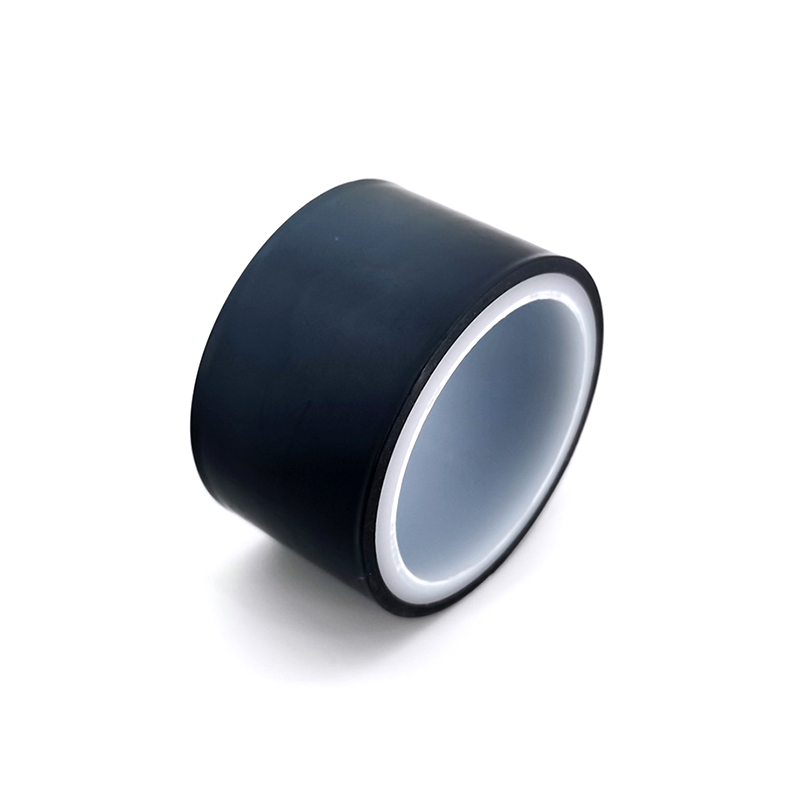 Pure PTFE Film Adhesive Tapes for Precision Release SurfacesThese thin, smooth PTFE film tapes offer a minimal release layer for precision heat-seal tooling and idler rollers with low wrap angles, where fabric carriers would be too thick.View Product →
Common Installations Where the Tape Earns Its Place
Across manufacturing, PTFE tape is applied wherever a hot surface meets a sticky material. The most common installations include:
- Heat-seal jaws in vertical and horizontal packaging machines
- Idler rollers and guide plates in film converting lines
- 3D printer cold plates and heated beds
- Textile fusing presses and ironing tables
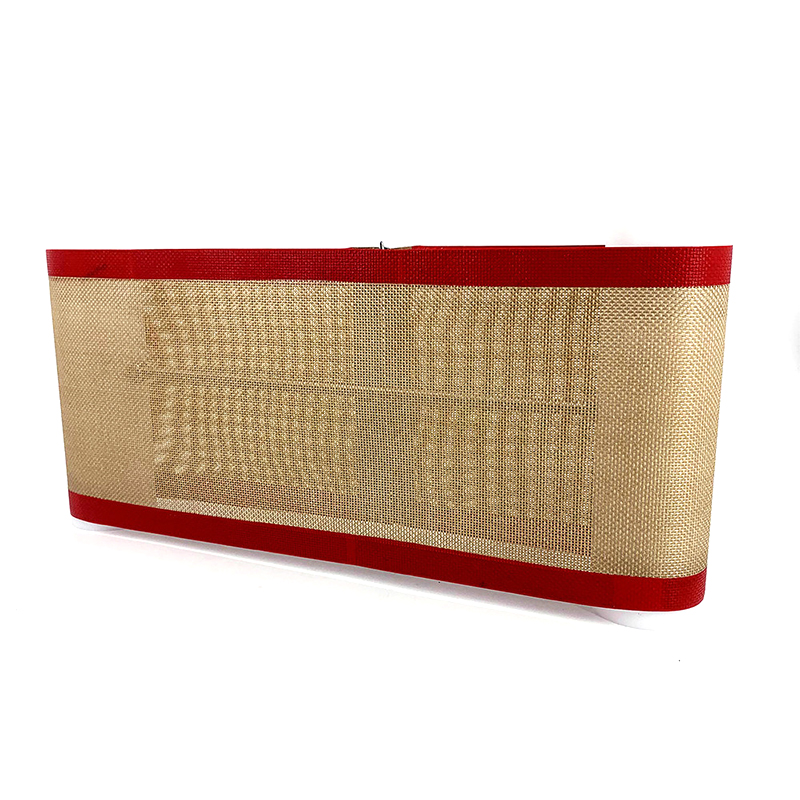
- Sealing edges of PTFE conveyor belts
In every case, the effect is identical: the cleanup step disappears, and the machine runs longer between maintenance stops. A plant that wraps its heat-seal jaws with PTFE tape typically reports reduced line downtime and fewer rejected packages due to contaminated seals.
Taizhou Yaxing Plastic Industry Co., Ltd. manufactures PTFE pressure sensitive tape and related fluoroplastic products at its facility in Taizhou, Jiangsu, and exports to Europe, America, Asia, and Africa.
FAQ
What is PTFE pressure sensitive tape?
It is a self-adhesive tape with a PTFE face and a pressure sensitive adhesive backing. The adhesive bonds to a substrate on contact, while the PTFE surface provides a release layer that rejects sticky materials.
What temperature can PTFE pressure sensitive tape withstand?
PTFE tape with silicone adhesive can operate continuously at up to 260°C. Tape with acrylic adhesive is rated for 130°C continuous service. Short-term peaks are generally higher, but selection should rely on the continuous rating.
Is PTFE pressure sensitive tape reusable?
Yes. The PTFE face does not degrade with repeated bonding and peeling because nothing actually bonds to it. In packaging lines, a tape often lasts more than 100 cycles before the adhesive backing must be replaced.
Is PTFE tape safe for food-contact applications?
PTFE is chemically inert and widely accepted for food contact under regulations such as FDA 21 CFR 177.1550. The adhesive must also be selected for indirect or direct food contact depending on the application.
Message Us Right Now!

- Phone: +86-18651171105
- Fax: +86-18651171105
- Email: yaxing@yaxing.com
- Address: No. 18, Yongxin East Road, Gaogang District, Taizhou City, Jiangsu Province, China.
Copyright © Yaxing Plastic Industry Co., Ltd. All Rights Reserved. Custom High-End Precision PTFE Series Products Manufacturers 