

 English
 Español
 русский
PTFE Pressure Sensitive Adhesive Tape: Uses, Types and Selection Guide
In a packaging plant, a heat sealer is running at full speed when molten plastic film bonds to the steel jaws. The line stops, an operator scrapes the residue off, and production resumes — but the same failure returns within weeks. A more permanent solution is to cover the jaw surface with a layer of PTFE pressure sensitive adhesive tape. This self-adhesive composite brings PTFE properties to steel, aluminum or ceramic substrates through a pressure-sensitive adhesive, requiring no heat, solvent or curing step. It is a quick, cost-effective fix that most maintenance teams can install in under an hour.
Content
- 1 What Is PTFE Pressure Sensitive Adhesive Tape?
- 2 Core Properties That Drive Practical Applications
- 3 Primary Industrial Applications of PTFE Pressure Sensitive Adhesive Tape
- 4 How to Choose the Right PTFE Pressure Sensitive Adhesive Tape
- 5 Application Tips and Common Mistakes
- 6 Frequently Asked Questions
What Is PTFE Pressure Sensitive Adhesive Tape?
PTFE pressure sensitive adhesive tape consists of two functional layers: a PTFE base and a pressure-sensitive adhesive. The base determines temperature resistance, mechanical strength and surface behavior. The adhesive determines bonding strength and chemical compatibility with the substrate.
The two base constructions dominate the market:
- PTFE film tape uses skived virgin PTFE film as the backing. It offers the smoothest surface, lowest thickness and the highest dielectric performance, making it ideal for coil insulation and thin-profile applications.
- PTFE coated glass cloth tape uses a fiberglass fabric coated with PTFE. It provides higher tensile strength and better tear resistance than pure film, which is why it is the standard choice for sealing jaws and hoppers that face repeated mechanical pressure.
Adhesive selection matters just as much. Acrylic adhesives deliver aggressive tack at room temperature and are well suited to general industrial protection. Silicone adhesives extend the continuous service temperature to 260 C and provide a cleaner release at high temperature. Both are pressure-sensitive, so installation requires hand pressure only, and the tape can be repositioned during the first few minutes. Product options from manufacturers such as Taizhou Yaxing Plastic Industry Co., Ltd. include both acrylic and silicone adhesive versions.
Core Properties That Drive Practical Applications
Every real-world use of PTFE pressure sensitive adhesive tape can be traced back to five properties of the PTFE layer: heat resistance, non-stick behavior, low friction, chemical inertness and electrical insulation. These properties are not abstract claims; they define measurable parameters that engineers evaluate during material selection.
PTFE has one of the lowest coefficients of friction among solid materials, ranging from 0.05 to 0.10, which is why residues and molten films do not stick to its surface.
- Non-stick surface: Low surface energy prevents adhesives, resins and molten plastic from bonding, so the tape cleans easily and consistently.
- Heat resistance: PTFE retains its mechanical properties from -60 C to 260 C, surviving continuous operation in ovens, dryers and sealing equipment.
- Chemical inertness: The tape resists attack by most acids, bases and organic solvents, including aggressive fumes in chemical plants.
- Electrical insulating behavior: The PTFE backing provides stable dielectric properties across a wide frequency range, which supports coil winding and transformer applications.
Primary Industrial Applications of PTFE Pressure Sensitive Adhesive Tape
The most common industrial applications fall into four groups: packaging machinery sealing, chute and hopper lining, electrical insulation and surface protection.
In packaging machinery, the tape is applied directly to heat sealing jaws. The PTFE facing prevents the heated film from sticking to the metal, reducing the formation of residue that causes downtime and product defects. This is a well-documented benefit in high-volume packaging operations where heat sealing cycles are continuous.
For material handling equipment, PTFE pressure sensitive adhesive tape is used as a low-friction liner on chutes, hoppers and funnel walls. Sticky powders, plastic pellets and food ingredients slide freely instead of bridging or clogging the flow path.
Electrical applications include coil wraps, transformer insulation and cable jacketing. The tape provides high dielectric strength and chemical resistance, and it can be wrapped tightly around complex shapes because the pressure-sensitive adhesive bonds instantly.
Surface protection is another common role. Rollers, guide rails and conveyor supports benefit from a layer of PTFE tape that keeps adhesives and coatings from accumulating. Operators can strip off a contaminated layer and replace it without replacing the underlying equipment.
In the rubber industry, PTFE pressure sensitive adhesive tape is used on calender rolls and curing presses. The tape prevents uncured rubber compounds from sticking to steel surfaces, reducing product defects and cleanup time. It also helps in post-cure handling where the rubber still has some tack.
In the chemical processing sector, tape is applied to flange surfaces and pipe guides. The inert PTFE layer resists corrosive fumes and aggressive solvents, extending the service life of the underlying steel or aluminum part.
In heat sealing machinery, contamination from melted packaging film is usually a symptom of a bare metal surface. PTFE pressure sensitive adhesive tape addresses the cause by providing a release surface that prevents adhesive bonding in the first place.
How to Choose the Right PTFE Pressure Sensitive Adhesive Tape
Selection starts with the maximum working temperature and the mechanical load on the taped surface. Once these are known, choose between a film backing and a glass cloth backing, then select the adhesive that matches the operating environment.
PTFE Film Tape
Best for smooth surfaces, thin-profile insulation and applications where the lowest friction and uniform appearance matter most.
PTFE Glass Cloth Tape
Best for sealing jaws, rollers and hoppers where repeated pressure, abrasion and tearing risks exist.
| Property | Acrylic adhesive | Silicone adhesive |
|---|---|---|
| Max continuous temperature | 180 C | 260 C |
| Tack at room temperature | High | Medium |
| Chemical resistance | Good | Excellent |
| Typical use cases | General industrial and packaging machinery | High-temperature ovens, electronics and release surfaces |
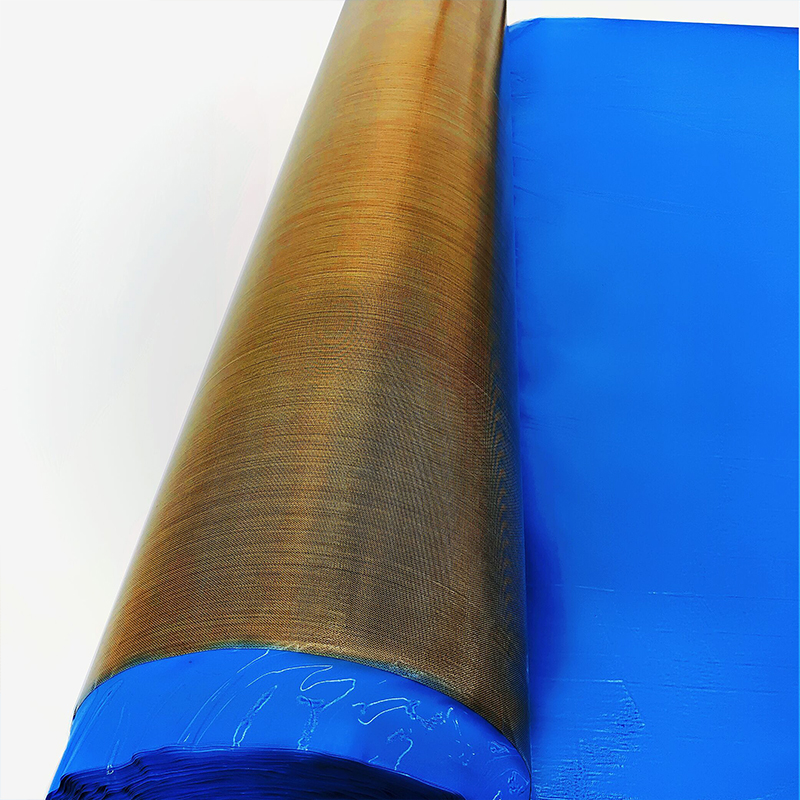 Acrylic Adhesive PTFE Tape for Heat Sealing and Packaging MachinesThis tape provides a release surface on heat sealing and packaging equipment, resistant to abrasion and tearing. It withstands continuous temperatures from -40°C to 170°C and is available in various thicknesses. Ideal for covering rollers, chutes, and bonding tools.View Product →
 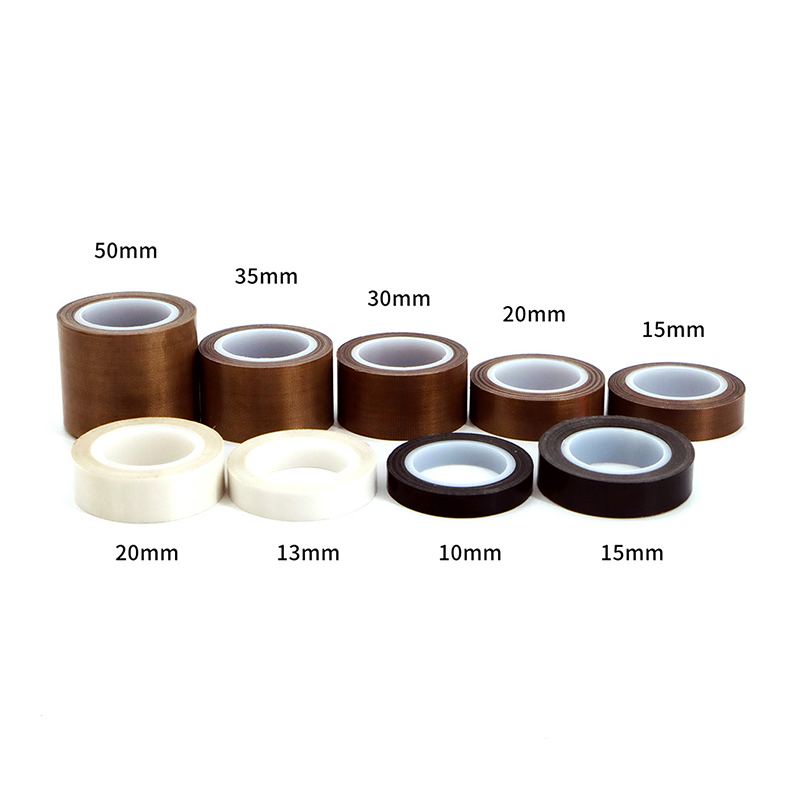 Silicone Adhesive PTFE Tape for High-Temperature Sealing ApplicationsDesigned for heat sealing jaws and rollers, this tape offers an easy-release surface with silicone adhesive. It operates continuously from -70°C to 260°C, and anti-static or black UV-resistant versions are available to suit demanding industrial environments.View Product →
Another selection factor is tape thickness. Film-backed tapes are commonly available from 0.05 mm to 0.25 mm, while glass cloth tapes typically range from 0.13 mm to 0.35 mm. Thicker constructions offer better wear resistance but reduce heat transfer, which matters in heat sealing applications that require a precise thermal profile.
Continuous temperature rating by tape type
Application Tips and Common Mistakes
The main reasons for tape failure are poor surface preparation and trapped air. Both can be avoided by following a short sequence.
- Clean the substrate with isopropyl alcohol, then allow it to dry fully before applying.
- Cut the tape a little longer than needed so that edges remain easy to handle.
- Align the tape and peel the liner slowly from one side while pressing the tape onto the surface.
- Use a squeegee or your fingers to apply consistent pressure and work any trapped air toward the edge.
- Let the tape dwell for 24 hours to reach full bond strength before subjecting it to load.
Surface oxidation and oils are the most frequent culprits behind premature peeling. In a demanding environment, a silicone adhesive version offers a safer margin because it retains bonding strength at temperatures that soften acrylic adhesive.
Replacement scheduling is a practical concern. In heavy duty applications, the tape surface will eventually wear or accumulate a thin layer of burnt residue. Replacing it is far less expensive than repairing a scratched sealing jaw or a corroded hopper wall. Many users rotate replacement during scheduled maintenance windows rather than waiting for visible failure.
Do not stretch PTFE glass cloth tape during installation. Stretching creates internal tension that can cause the tape to lift and wrinkle after a few thermal cycles.
Frequently Asked Questions
What is the temperature limit of PTFE pressure sensitive adhesive tape?
The PTFE backing does not lose its key properties up to 260 C continuous. The adhesive is normally the limiting factor: acrylic versions are suitable to 180 C, while silicone versions can operate at 260 C.
What is the difference between PTFE film tape and PTFE glass cloth tape?
PTFE film tape is thin and smooth, making it ideal for insulation and low-friction applications. PTFE glass cloth tape has fiberglass reinforcement and is therefore stronger, more tear-resistant and better suited to sealing jaws and hoppers where physical load occurs.
Can PTFE pressure sensitive adhesive tape be used in food packaging operations?
PTFE is widely used in food processing and packaging because it is chemically inert. The tape is commonly applied to heat sealing jaws and guides that come into contact with packaging film. Confirm that the specific PTFE grade and adhesive meet the regulatory requirements of your market.
How should PTFE pressure sensitive adhesive tape be stored?
Store the roll in a cool, dry location away from direct sunlight. Keep it in the original packaging until use, and avoid folding or creasing because the adhesive can deform and the PTFE perforate.
Message Us Right Now!

- Phone: +86-18651171105
- Fax: +86-18651171105
- Email: yaxing@yaxing.com
- Address: No. 18, Yongxin East Road, Gaogang District, Taizhou City, Jiangsu Province, China.
Copyright © Yaxing Plastic Industry Co., Ltd. All Rights Reserved. Custom High-End Precision PTFE Series Products Manufacturers 