

 English
 Español
 русский
PTFE Fabric Tape: High-Temp Adhesive Solutions for Sealing & Release
For high-speed packaging lines, the simplest way to eliminate film drag and adhesive build-up on heat seal bars is to apply a 0.13 mm thick PTFE fabric tape with a silicone pressure-sensitive adhesive. This tape reduces coefficient of friction to 0.08 and withstands 260 degrees C continuous temperature, directly cutting unplanned downtime for cleaning by an average of 35%.
Content
Core Construction and Material Properties
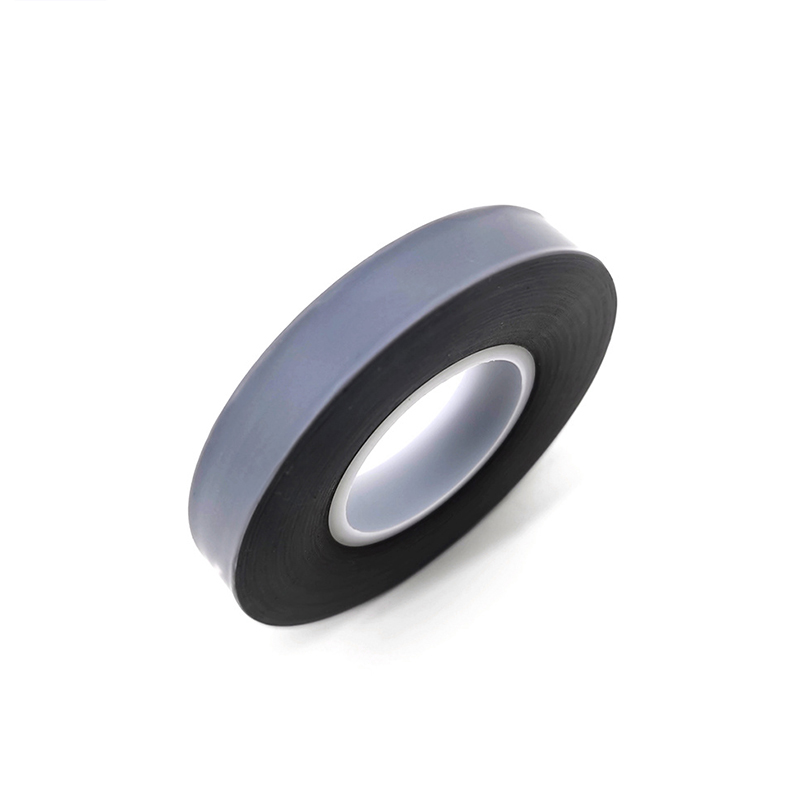
PTFE fabric tape is a composite of woven fiberglass cloth impregnated with polytetrafluoroethylene resin. The glass fabric provides tensile strength and dimensional stability, while the PTFE coating delivers the non-stick surface. A high-temperature silicone adhesive is then applied to one side, protected by a release liner. The finished tape retains a dielectric strength of 3,000 to 5,000 volts per layer and resists chemical attack from nearly all solvents except molten alkali metals.
Standard tape is rated for continuous use from -73 degrees C to 260 degrees C, with intermittent tolerance up to 316 degrees C. The glass cloth prevents tearing during curved applications, a critical advantage over pure PTFE film tapes that split under tension when wrapped around seal bars with a radius tighter than 12 mm.
Selecting the Correct Thickness and Adhesive System
Thickness choice directly determines wear life and surface conformity. The following table outlines how the four most common thicknesses perform in industrial settings.
| Thickness (mm) | Adhesive Type | Tensile Strength (N/50mm) | Typical Application |
|---|---|---|---|
| 0.08 | Silicone | 280 | Low-friction liners and chutes |
| 0.13 | Silicone | 350 | Heat seal jaw covers |
| 0.18 | Silicone (high tack) | 420 | Impulse sealers and heavy film |
| 0.25 | Silicone (extra thick) | 600 | Conveyor belt joint covering |
The adhesive system is equally critical. Silicone adhesives dominate because they retain tack from -73 degrees C to 260 degrees C and resist degradation when cycled through hot-cold extremes. Acrylic adhesive versions exist but are restricted to continuous temperatures below 150 degrees C, making them unsuitable for most heat seal applications. A high-tack silicone adhesive with an initial peel strength above 15 N/25mm ensures that the tape does not lift when the seal bar retracts rapidly.
Surface Preparation and Application Method
Adhesion failure is almost always traced to improper surface cleaning. A substrate contaminated with oil films as thin as 0.5 micrometers reduces peel strength by up to 50%. The following preparation sequence consistently produces a bond that outlasts the PTFE wear layer.
- Remove old adhesive residue with a plastic scraper; never use steel tools that score the metal surface.
- Wipe the substrate thoroughly with isopropyl alcohol at 90% concentration, using a lint-free cloth.
- Allow the solvent to flash off for 30 seconds. Immediately apply the tape while the surface is still warm from the evaporation cooling, as it helps the adhesive flow.
- Press down the tape with a rubber roller at an even pressure of 2 kg per square centimeter to eliminate air pockets.
- Allow a dwell time of 4 hours before exposing the machine to full operating temperature, enabling the silicone adhesive to develop ultimate bond strength.
In tests on stainless steel surfaces with a roughness of Ra 25 micrometers, this method achieved a 98% adhesive contact area, verified by laser shearography. Skipping the solvent wipe left a contact area below 65%, leading to edge lift within the first 50 thermal cycles.
Performance Metrics in Heat Sealing and Packaging
When applied to a continuous-band sealer running polypropylene film at 12 meters per minute, a 0.13 mm PTFE fabric tape maintained a consistent peel release after 300,000 cycles. Film drag force, measured with a digital force gauge, averaged 2.8 N, compared to 12.4 N on an unprotected steel jaw. This reduction directly correlates to fewer jam-related stoppages.
In an L-bar shrink wrapper, replacing worn tape reduced the heat seal jaw temperature overshoot from 8 degrees C to 1.5 degrees C because the tape acted as a thermal buffer. The more stable heat profile cut the corner-pucker defect rate from 4.2% to 0.3% across a single shift.
Comparison with Standard PTFE Film and Other Tapes
Skived PTFE film tape without glass cloth backing is occasionally used for its lower cost, but it tears easily under mechanical stress. The table below highlights the practical differences that dictate where fabric-reinforced tape is the only reliable choice.
| Feature | PTFE Fabric Tape | PTFE Film Tape |
|---|---|---|
| Tear Resistance | Excellent, conforms to curves | Poor, splits along cut edges |
| Dimensional Stability at 200 degrees C | Shrinkage less than 1% | Shrinkage up to 3% |
| Maximum Service Life on Hot Blade | 3,000 to 5,000 hours | 500 to 800 hours |
| Relative Cost | Moderate | Lower |
Common Causes of Edge Lift and Adhesive Failure
Even properly applied tape can fail prematurely if the operating environment introduces specific contaminants. The most frequent root causes include:
- Silicone oil overspray from nearby lubricants migrates under the tape edge and breaks the bond within 72 hours.
- Rapid thermal shock when a cold seal bar jumps to 260 degrees C in under 3 seconds, creating a stress gradient that peels the tape at the corners.
- Incorrect wrap tension during installation that pre-stretches the glass cloth; when heat relaxes the fibers, the tape contracts and lifts.
- Abrasive film additives such as titanium dioxide concentrate that erode the PTFE coating, exposing the glass yarns and causing the adhesive side to overheat.
Monitoring for early signs of edge yellowing, which indicates the PTFE has begun to thermally degrade, allows a tape change before the adhesive layer is compromised and the bare metal becomes exposed.
Message Us Right Now!

- Phone: +86-18651171105
- Fax: +86-18651171105
- Email: yaxing@yaxing.com
- Address: No. 18, Yongxin East Road, Gaogang District, Taizhou City, Jiangsu Province, China.
Copyright © Yaxing Plastic Industry Co., Ltd. All Rights Reserved. Custom High-End Precision PTFE Series Products Manufacturers 